Walk down the basement stairs of a 1920s house in the Central Neighborhood or Slabtown and look at the front foundation wall, down low, where the water line comes through the concrete. There's a shutoff valve, the meter, and a short stub of pipe between the wall and the valve. I look at that stub before I look at the kitchen.
Traverse City says it has no known service lines made entirely of lead. What it does have is roughly 750 old galvanized steel lines that were once hooked to a lead gooseneck at the water main, and under Michigan's rules those count as lead service lines and have to come out. If you're shopping the older streets close to downtown Traverse City, some of those 750 are under the yards you're walking across at showings.
The gooseneck
A gooseneck is a piece of lead pipe about 3 feet long that the city used as a flexible joint between the brass fitting on the main and the threaded galvanized pipe heading to the house. According to the city's Water and Sewer Improvements page, those went in before the mid-1940s, and the city has been running copper on its side of the curb stop ever since.
The wording that matters is in Michigan's 2017 Lead and Copper Rule, as the city summarizes it: a galvanized service counts as a lead service line if it "is or ever was" connected to a lead gooseneck. So the lead piece could have been swapped out decades ago and the galvanized pipe in the front yard still makes the list.
Not every galvanized service line qualifies, though. If the private galvanized pipe was originally tied into city copper, it never touched a gooseneck and the city says it doesn't need replacing.
Who pays for it
The water utility does. The city's page says the rule requires the utility to pay for replacing the private part of the service, from the curb stop near the right of way into the house. The state's MI Lead Safe FAQ says suppliers cover it with the revenue they collect from customers, with state grants and loans available to help. In Traverse City that meant a $3,510,500 Drinking Water State Revolving Fund loan plus a $1,504,500 grant in 2022, and later a $2 million grant from EGLE, all listed on the city's project page.
So I would not ask a Traverse City seller for a price credit to replace a galvanized service line that qualifies for the city program. You'd be negotiating over a bill the city already owns.
The pipes inside the house are another matter. The city describes the program as running from the curb stop into the building, and it says nothing about the plumbing past that point. If the house still has old galvanized running up to the second-floor bathroom, that's yours, and that's a question for a plumber (ask a plumber, not me, what it costs to repipe a 1920s two-story).
How far along the city is
By the city's own count, crews did 121 replacements in 2023, 218 in 2024, 215 in 2025, and 162 scheduled for 2026, against roughly 750 galvanized service lines that meet the criteria. The 2026 season started in late April, and the city was still posting block-by-block schedules into October (the 900 and 100 blocks of Grant and the 1000 block of Barlow the week of September 28, 2026, then stretches of South Union, East Eighth, Washington, South East Bay Boulevard and Wenonah the week of October 5, 2026).
If all 162 got done, that's a few dozen short of 750. I don't know when those last ones are scheduled, or whether the 750 estimate will move as crews dig up lines nobody had records for. For comparison, the state FAQ says the rule requires an average of 5 percent of lead service lines replaced each year, with most systems done within 20 years, so Traverse City is moving a lot faster than the minimum.
The Department of Municipal Utilities, (231) 922-4923, is who I'd call to ask whether a specific address was on the list and whether it's been done. Do that during the inspection period, not the week before closing.
What to check before closing
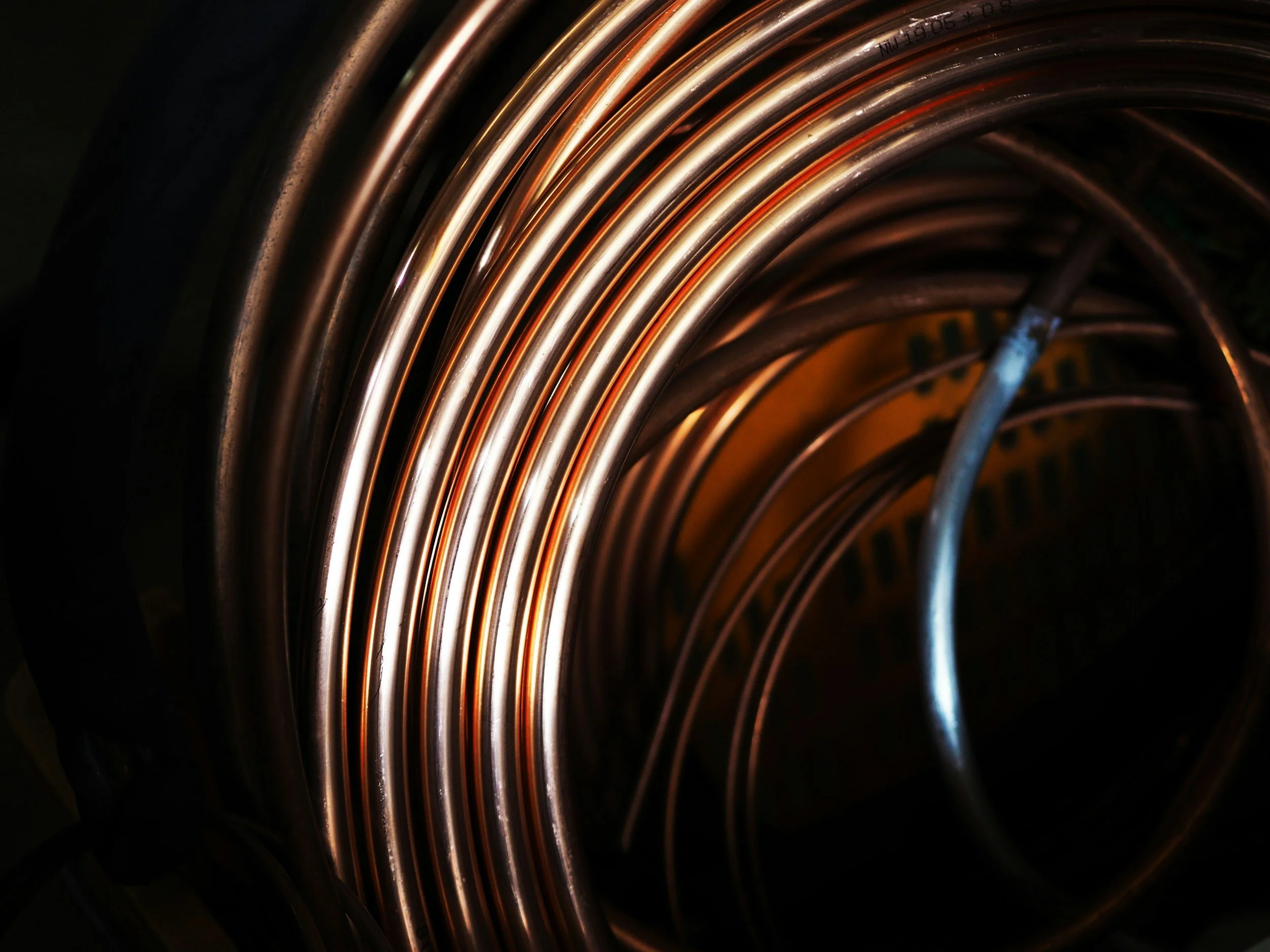
Start with the pipe itself, where it comes through the wall before the meter. Copper looks like a penny where you scratch it. Galvanized is dull gray with threaded joints, and a magnet sticks to it because it's steel. Lead is soft; an EPA presentation on identifying lead service lines says a coin scratch on lead shows shiny silver and that a magnet won't stick to it.
Bright new copper at the wall and a fresh sidewalk patch out front usually mean the replacement already happened.
Gray threaded pipe in a pre-1945 house on city water means a phone call. And if you want a real number, have the tap water tested by a certified lab. The state lowered its lead action level to 12 parts per billion on January 1, 2025, per the same MI Lead Safe FAQ, but that figure is a trigger for what the whole water system has to do. It isn't a safe line for one kitchen faucet, and the lab or the health department will explain a result better than I can. We see a lot of pre-war houses come up in the Central and Boardman neighborhoods, and older homes come with older paperwork too, like the lead paint disclosure for anything built before 1978.
Outside the city limits
Everything above is about Traverse City's system. A lot of houses out in the townships are on a private well, which comes with its own checklist (our well and septic inspection post covers that). Villages and cities that run their own water, like Elk Rapids, Suttons Bay and Frankfort, have their own programs, and I haven't looked up where any of them stand. Call the village or city office and ask the same question.
I'm a Realtor, not a plumber or a water quality expert, so confirm all of this with the city's utilities department, a licensed plumber and your inspector. Janel has more than 21 years in this market. If you're looking at a house on the older blocks and want a second set of eyes on what to ask, reach out.
Checked against the sources linked above in November 2026.
Taylor Brown, Realtor
Taylor@taylorbrownrealtor.com
Text (231) 360-1510 or Call Taylor
