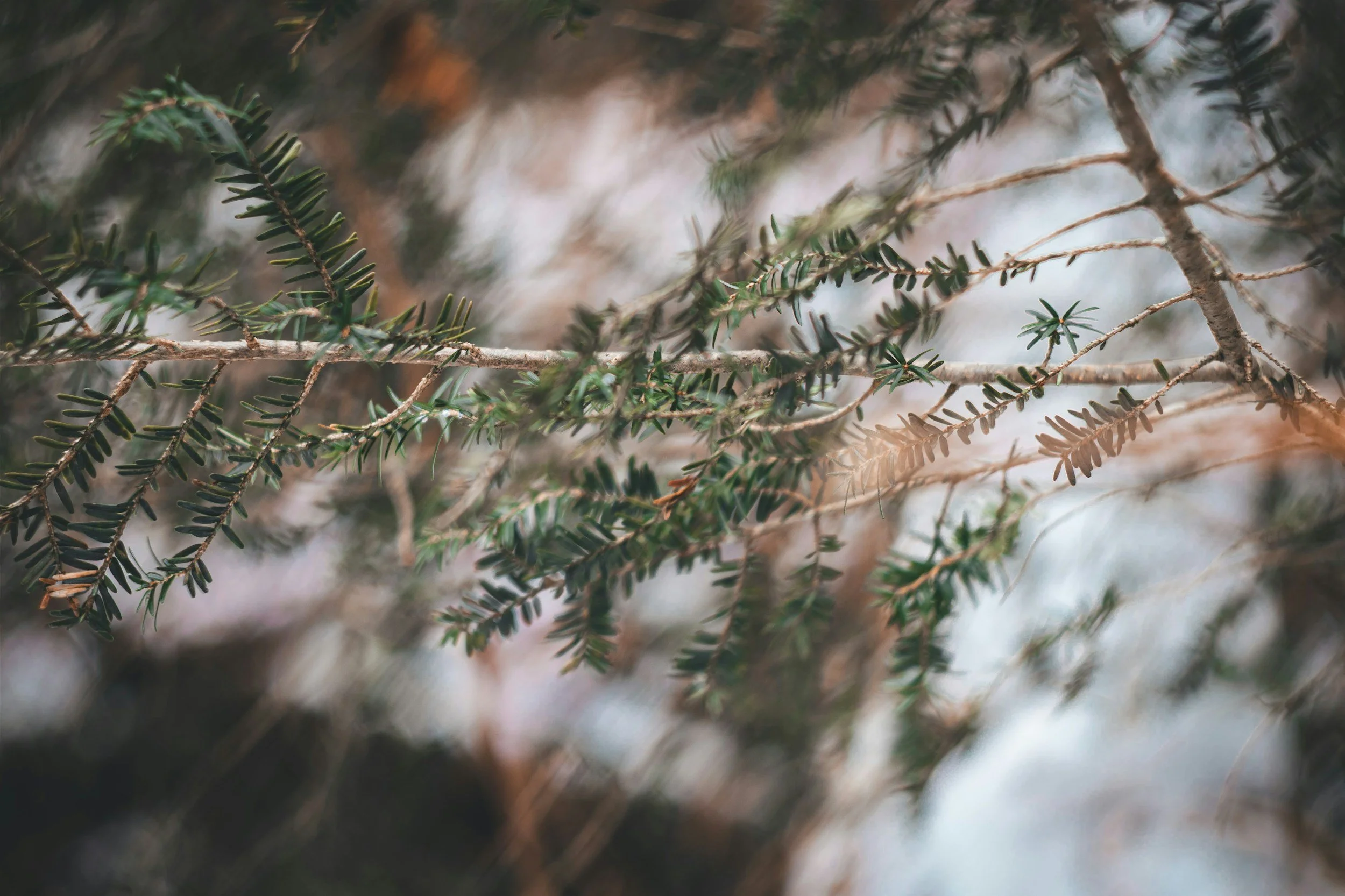
Flip a hemlock branch over and look at where the needles meet the twig. If you see little white cottony dots there, smaller than a pencil eraser, that tree has a clock on it. Mid-November is a good time to look, because the state says the insect behind those dots is present all year but easiest to spot from November through July.
Most houses we sell in Leelanau, Benzie and Antrim come with trees somebody fell in love with. Buyers ask about the roof and the well and the septic. Almost nobody asks whether the big hemlocks along the driveway will still be standing in 2032, or whether the red oaks out back are the last healthy ones on the road. There are three tree problems worth ten minutes of your showing on a wooded lot up north, and I'd rather you find them during the inspection period than the spring after you close.
(I'm a Realtor, not an arborist. Everything below is about what to look for and who to call, not a diagnosis.)
Hemlocks along the Lake Michigan side
Hemlock woolly adelgid is a small sap-sucking insect from East Asia. Michigan's invasive species program lists active populations in Antrim, Benzie and Leelanau counties, along with a string of counties farther down the shoreline. Left untreated, it kills a hemlock in four to ten years.
To tell a hemlock from everything else: short, flat needles that grow singly off the sides of the twig, with two white stripes underneath. Pines and spruces don't get this bug. On a ravine lot in Glen Arbor or along the bluffs south of Frankfort, the hemlocks are often the trees holding the slope in place, which is why I'd take this one more seriously than it sounds.
Finding it isn't automatically a deal-breaker. The state points homeowners to an ISA-certified arborist for diagnosis and treatment, and insecticide treatment works when it's done right. What I'd want, before the inspection window closes, is that arborist's opinion on how many trees are involved, what treatment costs, and how often it has to be repeated. I won't guess a number for you. It depends on the count and the size of the trees, and you should hear it from the person who'll do the work.
One more detail, and it is a boring one. Under MDARD's hemlock woolly adelgid interior quarantine, effective July 29, 2024, all of Antrim, Benzie and Leelanau counties are regulated areas. Hemlock branches with needles on them can't just go to any brush pile. Inside the regulated area, that yard waste can only be moved to a disposal site with no hemlocks within 100 yards, and from March through October it has to travel covered or in an enclosed trailer. So if your plan for a Glen Arbor lot involves clearing hemlocks for a view, your tree crew needs to know where it's going. Grand Traverse County wasn't on the quarantine list in the version I read. I don't know if it'll stay that way, and the state's list will tell you before I can.
Red oaks
Oak wilt is a fungus, and it is hard on the red oak group (northern red oak, black oak, northern pin oak). The DNR's April 2026 notice says red oaks can die within weeks. White oaks can catch it too but do a better job of holding it off. Easy way to tell them apart in the yard: red oak leaves have pointed tips, white oak leaves are rounded. In November there are usually enough leaves still on the ground to check.
The DNR's standing advice is no trimming or pruning oaks from April 15 through July 15, when sap beetles carry spores into fresh wounds, and to prune in winter when the trees are dormant. It also spreads underground through connected roots and on firewood cut from infected trees, if the bark is left on. That's why a tight cluster of dead oaks worries me a lot more than one dead maple. Symptoms show up from late June into September, so on a November showing you're reading history: a group of fresh stumps close together, a gap in an otherwise solid stand of oaks, a stacked woodpile of oak by the garage. Ask the seller what came down and why.
If you're buying a wooded parcel to build on, this changes your calendar. The DNR recommends delaying harvest work that could damage remaining oaks until after July 15. Driveway cuts and excavators scrape bark off trees constantly, so I'd talk to the builder about timing the clearing before April 15 or after mid-July. It's one conversation and it can save the trees you bought the lot for.
Beech
Beech bark disease is the slow one, and local foresters have been watching it work through our beech for years. A scale insect coats the trunk in white wool, a fungus follows it in, and the tree declines over years. The state's beech bark disease page puts the Michigan toll at about 2.5 million beech so far and says only about 3% of American beech is resistant.
The homeowner problem is what the state calls beech snap. Infested trees can break off partway up the trunk in a heavy wind while the crown still looks healthy, and the largest trees are the most susceptible. I would not leave a big beech with a white, crusty trunk standing over a bedroom.
On the showing
We see this a lot in our market. Home inspection reports here rarely say much about trees beyond limbs over the roof, and that's fair, since inspectors aren't foresters. So walk the lot yourself. Flip a few hemlock branches, look at the oak leaves on the ground, look hard at the beech trunks, and count the stumps. Anyone who has sold houses up here as long as Janel has (21-plus years) remembers when the wooded lots were full of ash trees, and most of those are gone now. If something looks off, an arborist visit during the inspection period is a small cost next to taking down a dead 80-foot tree beside a roof.
And if you're still in the browsing stage on wooded acreage, around Elk Rapids or anywhere else in the five counties, set up a listing alert and we'll walk the trees with you when the right one comes up. Want me to look at a specific lot? Send me the address.
Checked against the sources linked above in November 2026. Confirm tree health and treatment with a certified arborist, and quarantine questions with MDARD.
Taylor Brown, Realtor
Taylor@taylorbrownrealtor.com
Text (231) 360-1510 or Call Taylor
