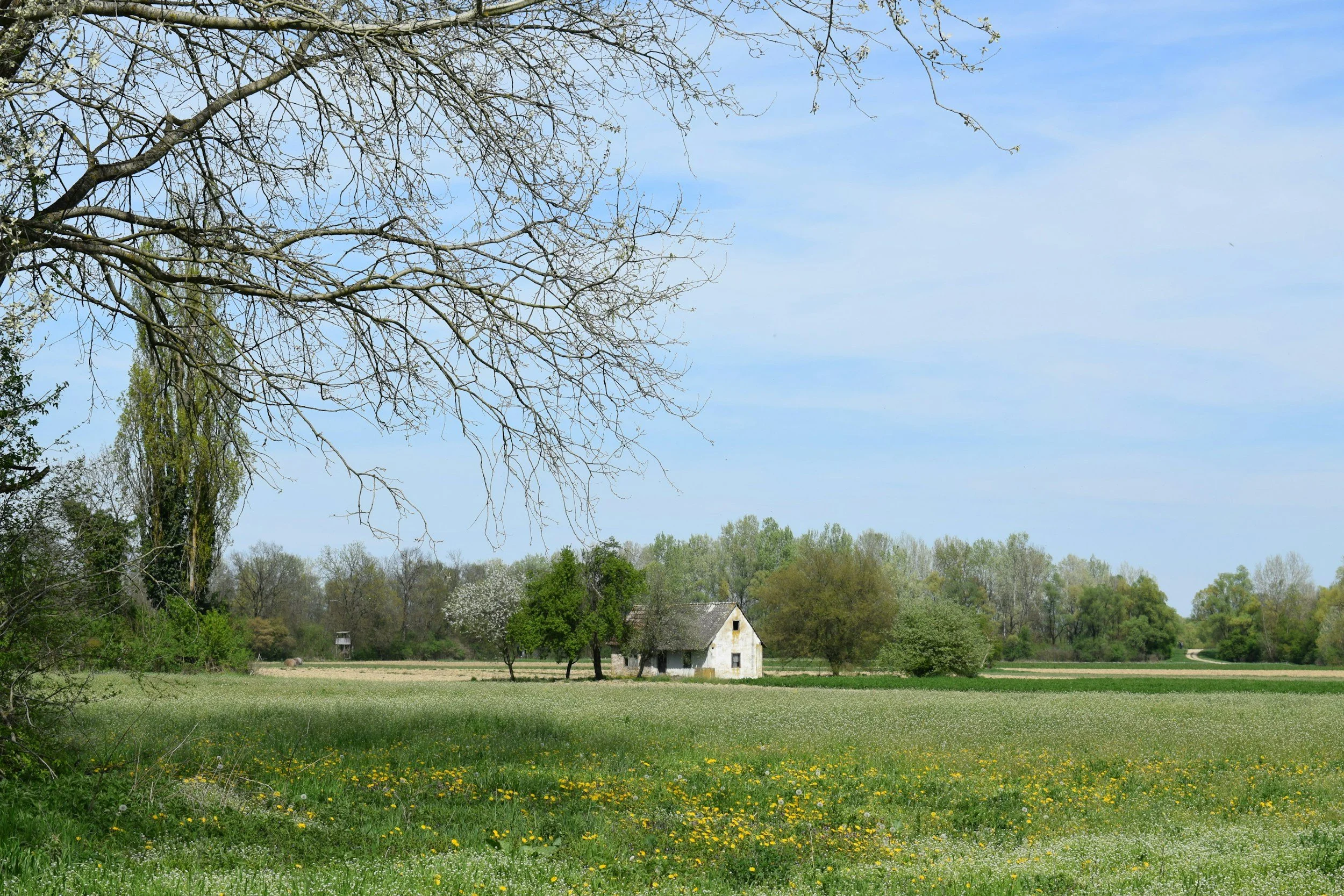
Drive M-72 east from Williamsburg toward Kalkaska, or poke around the section roads south of Interlochen, and you'll pass a lot of double-wides sitting on five or ten acres with a pole barn out back and a snowmobile trailer parked by the driveway. Around here, a manufactured home on its own land is often how people get acreage at all once the stick-built houses closer to town are out of reach.
Most buyers expect the inspection questions (roof, skirting, the furnace that came with it in 1994). Fewer expect the title question. A manufactured home starts its life with a certificate of title, the same kind of paper you get for a truck. Setting it on a foundation, on land you own, does not make that title go away by itself.
Two kinds of paper for one house
In Michigan the way a manufactured home becomes part of the land is an affidavit of affixture, under section 30i of the Mobile Home Commission Act, MCL 125.2330i. The owner sends the affidavit and the original title to the state, the state cancels the title, and the affidavit gets recorded with the county register of deeds. After that the law treats the home as part of the real property, and it can only be sold along with the land.
The statute wants the wheels, hitch and running gear off and the home attached to a foundation or other support system. The owner has to own the land, or hold a ground lease that runs at least 20 years past the date the affidavit is recorded. (That ground lease route exists, though I'd want an attorney looking at any deal built on it.)
If nobody ever did the paperwork, you can end up with a house that sits on a block foundation, gets assessed with the land, and still legally carries a vehicle-style title in somebody's file cabinet. Or in a shoebox at the seller's mom's house. Both things are true at once, and that's what trips people up.
It also runs the other way. An owner who wants to pull a home off its land has to record an affidavit of detachment and get a new title issued before moving it.
Why the tax bill won't tip you off
You'd think the property tax bill would tell you which kind of house you're looking at. It won't. The State Tax Commission's Bulletin 14 of 2016 says mobile homes outside a licensed park or campground are assessable as part of the real property they sit on, whether or not they're permanently affixed. So the summer and winter bills on an un-affixed double-wide look exactly like the bills on a ranch house down the road.
Homes inside a licensed park are a different animal. Those pay a specific tax of $3.00 a month per occupied home under MCL 125.1041 in place of regular property tax on the home itself, though the same bulletin says decks, sheds and attached garages built on the lot still get assessed. That's a whole separate post, and a park home isn't what I'm talking about here.
Where it bites: the lender
Lenders who write a regular mortgage on a manufactured home generally want it classified as real estate, with one loan covering the home and the land together. HUD's own FHA reference guide lists those conditions (real estate classification, a permanent foundation, the mortgage covering the unit and its site) and says homes built before June 15, 1976 are not eligible for FHA-insured financing at all. Conventional and USDA programs have their own lists. Your lender will tell you which one applies, and they'll ask to see the recorded affidavit of affixture.
So a missing affidavit usually shows up three weeks into a deal, when the underwriter asks for it and nobody can find it. That's the worst time to learn about it.
I would not write an offer on a manufactured home on acreage without asking for the recorded affidavit before anything else. If the seller doesn't have it, that's usually fixable. But it's the seller's job to fix, it takes time, and you want it written into the purchase agreement as a condition with a date attached. Since a 2022 amendment there's also a process for owners whose title was lost or never issued (the Senate Fiscal Agency's analysis of House Bill 5449 walks through why it was added), which helps a lot of older homes, but it's slower than handing over a piece of paper.
What to ask for
Ask for the recorded affidavit of affixture. It'll carry a recording stamp from the register of deeds (Grand Traverse's office is in the Governmental Center on Boardman Avenue; Leelanau's is in Suttons Bay). If it was never done, ask for the original certificate of title so the seller can do it now. Then find the HUD label or data plate, which tells you the manufacture date and whether that 1976 line matters. And have your title company search the record early instead of at the end; this paperwork is their world, and our post on title insurance up north covers what else they're looking at.
Working in this area, you learn to ask about the title on any house that arrived on wheels. I can't tell you how long the state is taking to process these right now, so ask your title company for a current turnaround before you set a closing date.
I'm a Realtor, not an attorney. A real estate attorney or your title company is who confirms the paperwork, and your lender decides what it will finance.
If you're hunting for a few acres out toward Kingsley, Fife Lake or Kalkaska and a manufactured home is on the table, set up a listing alert or send me a note and I'll help you sort out which ones have their paperwork in order. Have you run into a title like this on a place you were looking at?
Checked against the sources linked above in November 2026.
Taylor Brown, Realtor
Taylor@taylorbrownrealtor.com
Text (231) 360-1510 or Call Taylor
