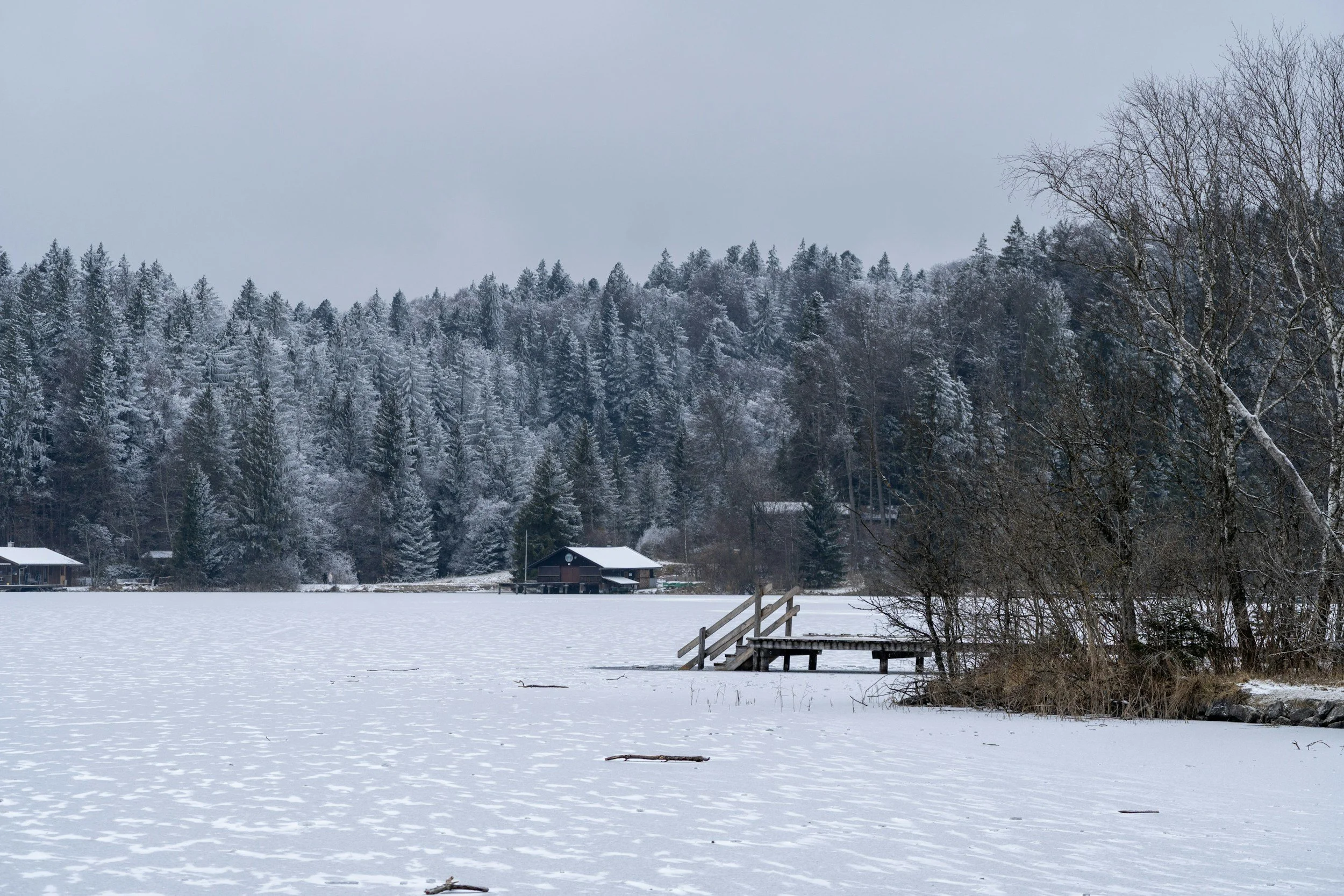
Michigan’s building code puts the frost line at 42 inches. A water service line up here has to sit at least 48 inches deep to count as protected from freezing, and a whole lot of cottages between Traverse City and Northport were plumbed by somebody’s grandfather who stopped digging at two feet because it was August and he was tired.
That’s the whole problem with the word “year-round” in a Northern Michigan listing. It’s not a defined term, and it’s not a checkbox on the seller’s disclosure. It’s a vibe, and in September it’s a vibe that’s about to get tested.
Why this matters this week and not in January
Labor Day just cleared out M-22, and this is the stretch of the calendar when cottages hit the market. Sellers who spent the summer thinking about it finally list, and buyers who already figured out that September is the smart month start touring.
The catch is that a three-season cottage looks exactly like a four-season house in September. The water’s on, the furnace (if there is one) hasn’t been asked to do anything, the road is dry and the plow question is theoretical. Everything that separates a true year-round cottage from a summer place is invisible until it’s 4°F at six in the morning in late January.
We see this pattern a lot in our market. The house performs beautifully at the showing, the buyer moves in full time, and the first hard freeze does the inspection nobody ordered.
The Four-Line Test
Working in this area, you pick up shortcuts. Four lines run through every cottage up here, and where each one sits tells you whether “year-round” is true. I call it the Four-Line Test: the water line, the heat line, the plow line and the insurance line. If a seasonal cottage in Northern Michigan fails two of the four, price it as seasonal, whatever the listing says.
Line one: the water line
Start at the well. Older cottages often have a well pit, a below-grade box near the house where the connection to the casing hides under the frost. Michigan’s well code requires an approved pitless adapter for any below-ground casing connection, so a pit is a tell that the water system predates the modern rules. It usually means the rest of the plumbing does too.
Then follow the line toward the house. Ask the seller, in writing, how deep the service line is buried and whether the cottage has ever been “drained down” for winter. If the answer to the second question is “yes, every October, for forty years,” that is also your answer to the first.
Inside, look for supply lines in exterior walls, in an uninsulated crawlspace, or run under the floor of a cottage sitting on piers. The Michigan Residential Code flat-out prohibits water pipe in those spots without insulation or heat to protect it. Grandpa did not read that chapter.
Line two: the heat line
A wall-mounted propane heater and a woodstove will keep you alive. They will not keep a crawlspace above freezing at 3 a.m. while you’re asleep upstairs. The question isn’t “does it have heat.” It’s “can it hold 55 degrees in every space that has a pipe in it, unattended, for a week in February.”
Traverse City averages well over 100 inches of snow a year, and January’s average low sits in the mid-teens. Now look at what’s under the house. A cottage on piers, or a skirted crawlspace with no insulation, is a house with its floor in the outdoor air, and no furnace fixes that from above.
If the cottage runs on propane, check whether the tank is owned or rented and whether it’s on a pre-buy. We just covered why the cheap propane window closes October 1, and a full-time occupant burns a lot more than a summer one.
Line three: the plow line
Leelanau County has about 50 miles of roads nobody plows, and plenty of cottages sit on private drives that were never meant to see a plow truck: too narrow, too steep, no place to turn around. In September you drive right in. In February the driveway is a decision.
Ask who plowed last winter and what it cost. If the answer is “nobody, we close it up,” that’s another line failed. Also ask about the school bus, the mail and the propane truck, because if the road doesn’t get plowed, none of them come either.
Line four: the insurance line
Carriers write a summer place and a primary residence differently, and the freeze exclusion in most homeowner policies requires you to have either maintained heat or shut off and drained the water. Buy a seasonal cottage to live in full time and don’t tell the carrier, and the policy may not respond the way you expect the first time a pipe lets go.
Get the quote before you write the offer, not after. Michigan premiums jumped nearly 50% in a year, and up north the carrier’s view of your heat source, your road and your distance from a hydrant is part of the price now.
What “year-round” costs when it isn’t
Ballpark for converting a seasonal cottage to a year-round cottage: roughly $10,000 to $20,000 if the bones are decent, and $50,000 or more if the service line has to be re-trenched to 48 inches, the plumbing pulled out of the exterior walls and the crawlspace insulated and conditioned. On a $500,000 place near Lake Leelanau that isn’t a dealbreaker. It is a number that belongs in your offer.
The honest version: a lot of cottages up here should stay three-season. Draining down in October and coming back at ice-out is a perfectly good way to own a place, and it’s how half the county has done it for a century. The mistake isn’t buying a seasonal cottage. It’s paying a year-round price for one.
What would you do?
Say you find the right place on a Leelanau two-track and the Four-Line Test comes back shallow line, woodstove, unplowed, seasonal policy. Do you walk, or do you write it $40,000 lower and plan the trench for next summer? There’s no wrong answer. There is a wrong way to find out, and it involves a flashlight and a crawlspace in January.
Over 25 years of Northern Michigan winters, Janel has watched plenty of “year-round” cottages turn out to be three-season cottages with a good furnace salesman. If you’re looking at one this fall and want a second set of eyes on the four lines before you write, reach out. We’ll bring the flashlight.
Taylor Brown, Realtor
Taylor@taylorbrownrealtor.com
