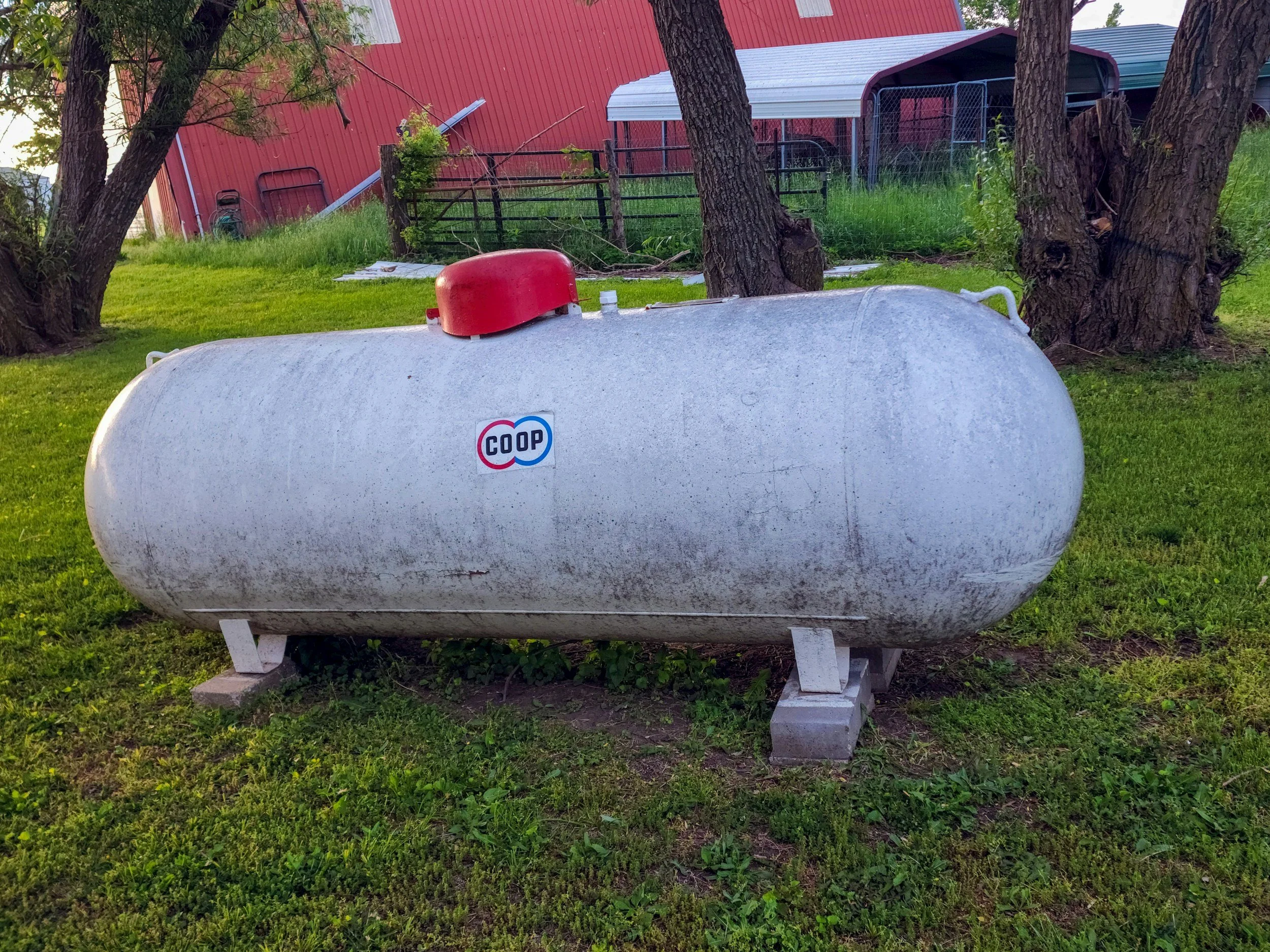
A residential propane tank in the yard of a rural Northern Michigan property
Michigan burns more residential propane than any other state in the country. Not Texas. Not Minnesota. Us.
And the reason is parked in the side yard of half the cottages I photograph: a 500-gallon tank, usually behind a lilac bush, quietly deciding what that house costs to own every winter. Statewide, propane heats about 8% of Michigan homes. In some northern Lower Peninsula counties, the state puts it at nearly 24%.
Nobody asks about it at the showing. Everybody asks about it in January.
September is the deadline nobody puts on the calendar
The Michigan Public Service Commission put out a notice this June telling propane users to shop around and lock in contracts early — their words, not mine. The official heating season starts October 1, which is when the state resumes weekly price monitoring and when pre-buy pricing typically disappears.
That gives fall buyers and new owners a real, boring, unglamorous deadline: call suppliers before the furnace kicks on. Pre-buy and fixed-price plans let you lock a per-gallon rate for the season. Budget plans spread the cost across twelve months so February doesn’t hit like a truck payment.
One honest caveat the brochures bury: most pre-buy plans cover a set number of gallons. Burn through your allotment in a brutal winter, and the extra gallons come at whatever the market says that week. Know your usage before you buy.
What the tank actually costs you
Last heating season, Michigan residential propane ran roughly $2.17 to $2.37 a gallon, per the state’s weekly tracking. A typical Northern Michigan home burns somewhere in the neighborhood of 800 to 1,200 gallons a winter, depending on square footage, insulation, and how stubborn you are about the thermostat.
Run that math and you’re looking at roughly $2,000 to $2,800 a year — often double what the same house would pay on natural gas per unit of heat. Same house, same winter, different pipe.
And here’s the kicker: propane prices aren’t regulated in Michigan. There’s no rate case, no commission approval. Your price is whatever your contract says — which is exactly why the contract matters more than the commodity.
The map nobody prints
Natural gas up here follows the money roads. DTE runs gas to roughly 51,000 customers around the Traverse City region, and the mains generally trace the main corridors — US-31, M-72, the villages, the newer subdivisions.
Turn off onto a lake road, a two-track, or one of those private drives you share with eight neighbors, and the main quits. Out in Cedar, around the back side of Lake Leelanau, through big stretches of Antrim and Benzie — that’s tank country.
Here’s the part that trips up downstate buyers: the gas main ends right where the listings get good. The wooded five acres, the cottage at the end of the road, the view lot on the ridge — the very things people move up here for are the things gas infrastructure never reached.
Who owns the tank changes who you can buy from
This is the question that almost never comes up at a showing, and it should: is the tank owned or leased?
A leased tank belongs to the propane company, and by law only that company can fill it. Buy the house, inherit the tank, inherit the supplier — at least until you pay a pickup or swap fee. An owned tank is yours, and you can shop every supplier in the county against each other every single year.
We see this pattern a lot in our market: buyers close in October, the first delivery bill lands in November, and that’s the moment they learn what a leased tank means. The seller’s disclosure form doesn’t dig into any of this, so you have to.
Buried tanks add one more wrinkle — you’ll want to know the age of the tank and the condition of the lines, because “out of sight” and “out of warranty” tend to travel together up here.
The Tank Test
Working in this area, you pick up on the questions that save people real money. Before you write the offer on anything past the gas main, get answers to three:
Question one: what heats the house, and where does the nearest gas main actually end? Don’t guess from the neighbors — call DTE with the address. If the main is close, a line extension might be possible; if it’s a mile away, you’re a propane household, so underwrite the house that way.
Question two: who owns the tank, and does a contract come with it? Owned or leased, above ground or buried, and whether any pre-buy balance or lease transfers at closing. Get it in writing before you’re at the table.
Question three: what did this house actually burn the last twelve months? Ask the seller for a year of delivery records. It’s the single most accurate energy audit that exists for that specific house, and it’s free.
Two bonus points while we’re here. Lenders want a permanent heat source — a wood stove alone won’t get a conforming loan across the finish line. And if you’re thinking longer-term, cold-climate heat pumps have gotten legitimately good, and Michigan’s home energy rebate program currently offers income-qualified households up to $8,000 toward one. Plenty of folks up here run a heat pump for the shoulder seasons and keep the propane furnace for the week in February when the bay tries to freeze your eyebrows off.
The house past the gas main is still the right house
None of this is a reason to skip the cottage at the end of the road. Some of the best living in Northern Michigan happens on propane — my point is only that it should happen on purpose, with a locked contract and a tank you understand.
If you’re looking at listings this fall and you’re not sure which side of the gas main a property sits on, ask us. We’ll help you run the Tank Test before you write the offer — and before October 1 closes the cheap window.
Taylor Brown, Realtor
Taylor@taylorbrownrealtor.com
