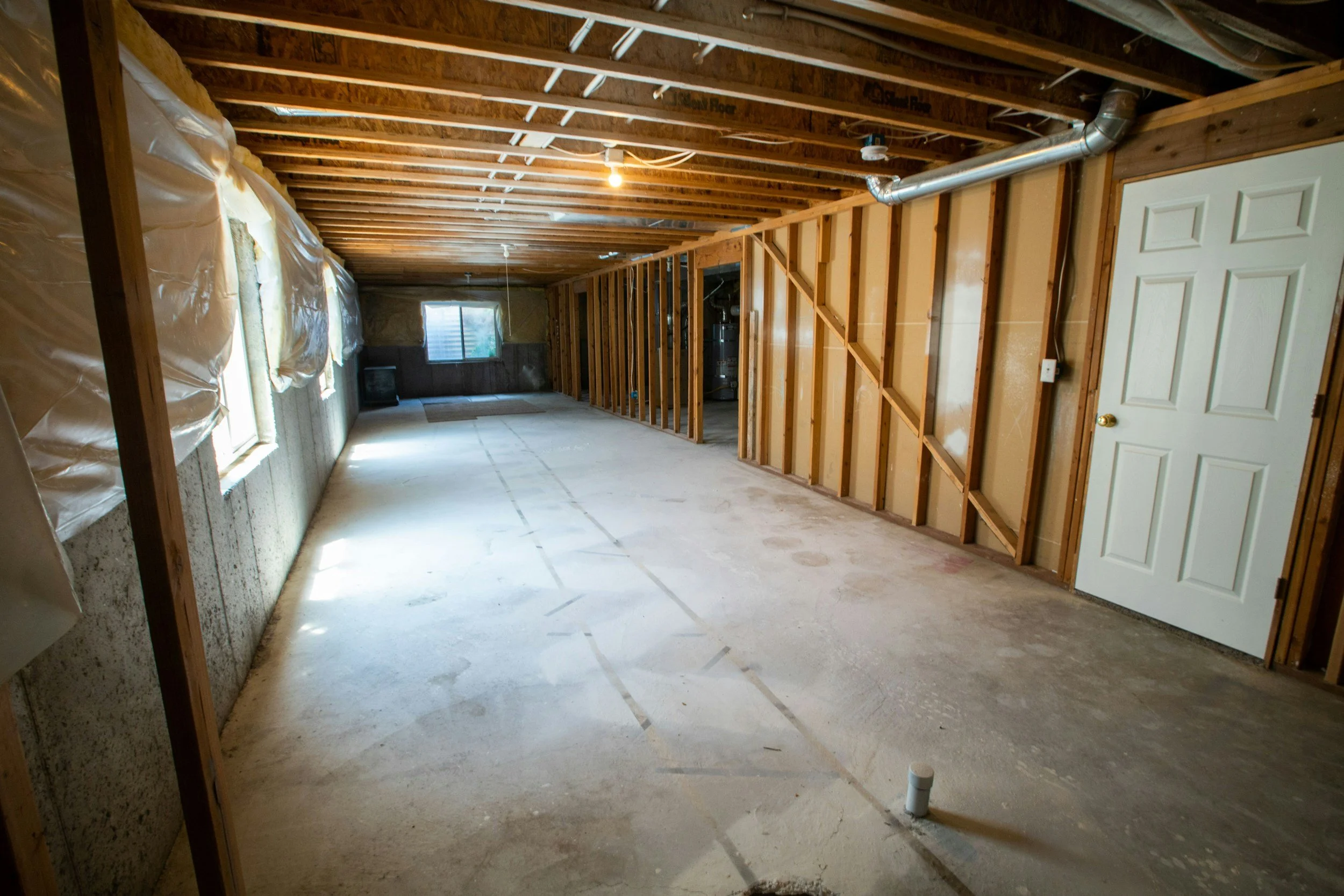
Thirteen percent of the radon tests run in Grand Traverse County come back at or above the EPA's action line. Drive an hour east to Otsego County and it's 40 percent. Go the other direction into Leelanau and it drops to 6. Same glaciers, same general idea of "up north," and the number swings by a factor of six depending on which county line you crossed on the way to the showing.
Those figures come from a map EGLE published in December 2019 using Air Chek test results, and I'll say up front that I don't have anything newer that breaks it out county by county. Antrim sits at 7 percent, Benzie at 10, Kalkaska at 7. Wexford 11. The map is still the one every local health department links to, so it's what we have.
I bring this up now, in the first week of September, because radon is a closed-window problem and the closed-window season is about six weeks out. Labor Day traffic is clearing off M-72 as I type this, the bay was flat and grey this morning, and the houses that go under contract this month will have their inspections done while the windows are still open. That's the worst possible time to guess about a gas you can't smell.
What radon does in a house up here
Radon comes up out of the ground from decaying uranium in the soil and rock. It gets pulled into a house through the basement slab, the sump pit, cracks in block walls, and the gap where the floor meets the foundation. In summer, with windows open and the house breathing, it mostly wanders back out. In January, when everything is sealed and the furnace is pulling air up through the house, it concentrates.
The EPA's action level is 4 picocuries per liter. The World Health Organization uses a lower number, about 2.7. Either way, it's the second leading cause of lung cancer in the country behind smoking, and the risk is dose over time. Nobody gets hurt by a weekend at a cottage. People get hurt by twenty winters in a finished basement bedroom.
And that last part is where it matters for a buyer. We see a lot of 1970s and 80s ranches in Garfield and East Bay Township where the basement has been finished into two bedrooms and a family room. The kids sleep down there. Those are the houses where a 5 or 6 pCi/L reading matters. A 1950s cottage on Lake Leelanau with a crawlspace and a vented skirt is a different animal, though I wouldn't skip the test there either, because a crawlspace that's been closed up and insulated behaves more like a basement than people think.
Why the county numbers are so different
I'm not a geologist, so take this as a working agent's understanding. Radon tracks the soil and bedrock underneath a house, and the glacial till that got dumped across Northern Michigan is not uniform. Otsego and Crawford sit on different material than the sandy moraine along the Leelanau Peninsula. The health departments will tell you, correctly, that a county average says nothing about your specific basement. Two houses on the same road in Long Lake Township can test at 1.2 and 9.
So the 13 percent figure for Grand Traverse County shouldn't relax anyone buying in Leelanau at 6, and it shouldn't scare anyone buying in Otsego at 40. Test in all three.
The test
Two ways to do it. The cheap way is a charcoal kit from the health department. Grand Traverse County sells them for $15 at the Environmental Health office at 2650 LaFranier Road, and every January they run a "Give a Can, Get a Kit" deal where a canned food donation gets you one free. The Benzie-Leelanau District Health Department hands them out from the Benzonia office on Frankfort Highway and the Lake Leelanau office on E. Duck Lake Road. You set the kit in the lowest lived-in level of the house for at least three days with the windows shut, mail it in, and wait for the lab.
That works fine for a house you already own. It does not work well inside a ten-day inspection contingency, because you don't control the house, you can't guarantee the windows stay shut, and the mail-in turnaround eats your window.
For a purchase, ask your home inspector to add a continuous radon monitor. Most of the inspectors we work with in the Traverse City area carry one. It sits in the basement for 48 hours, logs a reading every hour, and flags whether somebody opened a window halfway through. You get a number before your contingency expires. Cost varies by inspector, so ask them, not me, but it's a small line item next to the rest of the inspection bill.
One thing worth knowing about the paperwork. The Michigan Seller's Disclosure Statement asks the seller whether they're aware of environmental problems on the property and lists radon gas as an example. Almost every one I see has "unknown" checked, and that's an honest answer, because almost nobody has tested. An "unknown" on that line means nobody looked.
If it comes back high
Retest first. Short-term results bounce around, and a 4.3 on a rainy weekend might be a 3.1 the next week. If it's still over 4, the fix is a mitigation system: a sealed sump cover, a PVC pipe through the slab, an inline fan that runs continuously, and a vent that ends above the roofline. It's a plumbing job, not a construction project. Up here the quotes I hear about tend to land somewhere in the low four figures, and I'd get two of them. The health department keeps a list of certified measurement and mitigation contractors, and the NRPP search at nrpp.info lets you put in a zip code.
From a negotiating standpoint, this is one of the easier repair asks in a Northern Michigan deal. It's a defined problem with a defined fix and a defined cost, which is more than you can say for a failing septic field or a roof the insurer won't write. Sellers usually agree to it or credit for it, because the next buyer's inspector is going to find the same number.
If you're building instead of buying, Michigan doesn't require radon-resistant construction statewide, and a lot of the builders working in Williamsburg and the east side won't rough it in unless you ask, so ask before the slab is poured. A passive stack pipe during the pour costs a few hundred dollars. Retrofitting it later costs the full system.
What I'd do
Buying anywhere in the five counties, with a basement or a closed crawlspace: add the monitor to the inspection. Every time. I don't care if the listing is in Traverse City proper or halfway to Kalkaska.
Already own a house and never tested? Go get the $15 kit now, before the windows close for good in October, and run it in November when the furnace is on. Testing every two years is the health department's recommendation, since foundations shift and new cracks change the numbers.
If you've got a house under contract this month and you're not sure whether the inspector you booked carries a monitor, send me the name and I'll tell you.
Taylor Brown, Realtor
Taylor@taylorbrownrealtor.com
