You Can Sell the Whole Leelanau Orchard. Michigan Won’t Let You Sell Half of It. The Way Out Costs Seven Years of Credits Plus 6%.
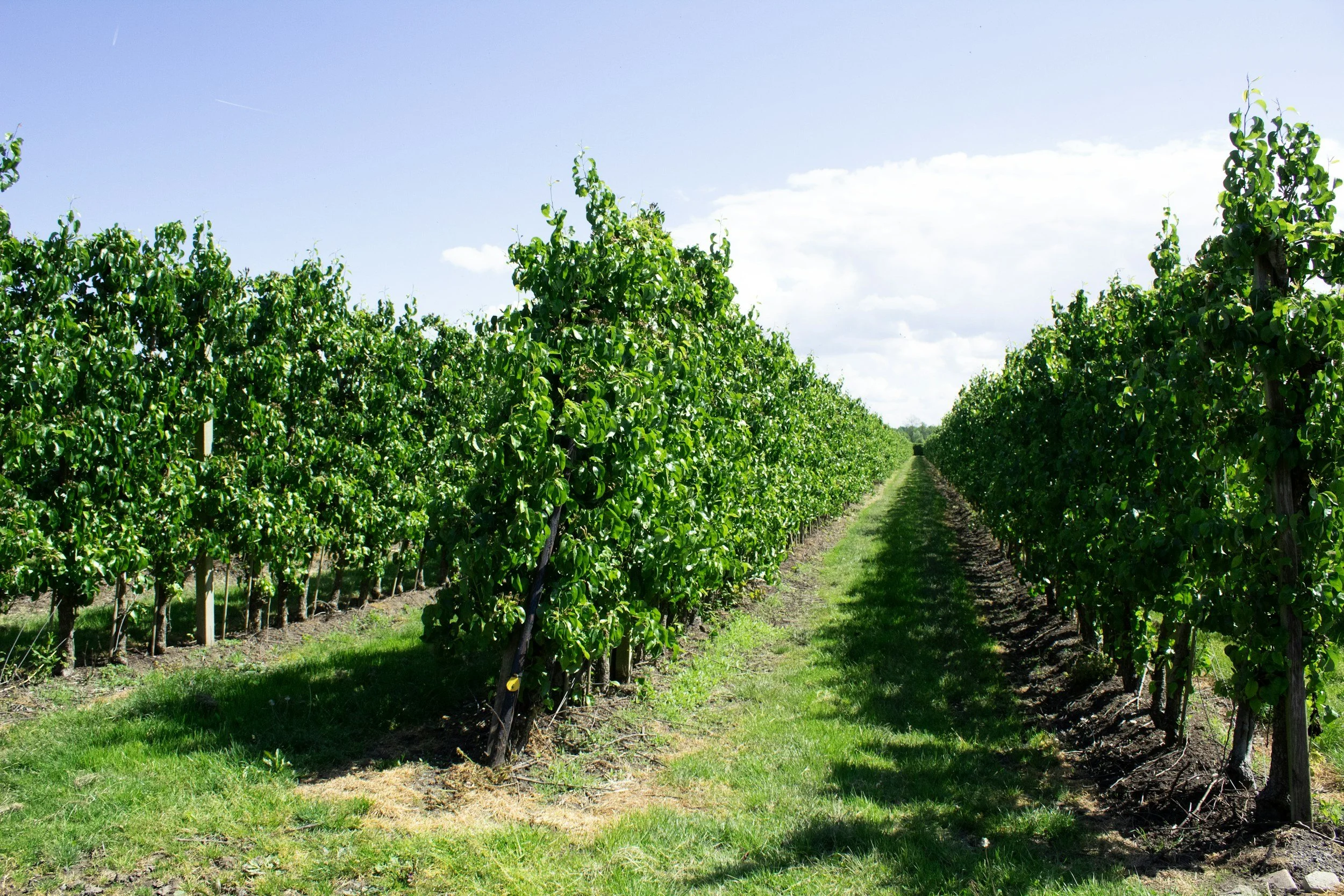
Somewhere on M-22 right now there’s a farm with a 1930s farmhouse, a barn, and forty acres of cherries behind it. The owner wants to sell the house and two acres to a young family and keep farming the rest.
Under a PA 116 agreement, that sale is not allowed. Not “difficult.” Not “needs a variance.” The state’s own FAQ says the quiet part out loud: all of the land described in the Agreement must remain under one ownership.
That is the single most expensive thing nobody explains about buying agricultural land in Northern Michigan, and it is recorded right there at the Register of Deeds where anybody could have read it.
What Is Actually Recorded Against That Farm
PA 116 is shorthand for what is now Part 361 of Public Act 451 of 1994, the Farmland and Open Space Preservation program. A landowner signs a Farmland Development Rights Agreement with the State of Michigan, promising to keep the land in agricultural use for a minimum of ten years and a maximum of ninety.
In exchange, two things happen. The landowner claims a Michigan income tax credit equal to the property taxes on the enrolled land and improvements, minus 3.5% of household income. The land also becomes exempt from special assessments for sanitary sewers, water, lights, and non-farm drainage.
To qualify, a parcel needs to be 40 acres or more with at least 51% in agricultural use; or between 5 and 40 acres with 51% in ag and gross income of $200 or more per tillable acre; or a state-designated specialty farm of at least 15 acres grossing $2,000 a year. Michigan Farm Bureau puts statewide enrollment at roughly 3.3 million acres.
Around here, that covers a lot of the ground between Suttons Bay and Northport, a lot of the ridges above Lake Leelanau, and a meaningful share of the orchard country in Antrim and Benzie. The agreement runs with the land. You inherit it.
The One-Ownership Rule Is the Whole Ballgame
Here is what catches people. You are perfectly free to sell PA 116 land. The state does not block the sale. What it blocks is the carve-up.
If the recorded agreement covers 40 acres, all 40 acres have to go to one buyer. Sales to multiple owners are only possible if the agreement itself is first split into separate agreements, and every resulting piece has to independently qualify all over again: 40 acres with 51% ag, or 5-plus acres with 51% ag and the capacity to gross $200 per tillable acre.
Run that math on a two-acre farmhouse split. It does not qualify. It cannot qualify. Two acres is below the statutory floor, full stop.
So the family homestead everybody assumed could be peeled off and sold to a kid, a neighbor, or a buyer who just wants the old house and the maple in the front yard? That is not a subdivision question or a township question. It is a state contract question, and the answer is no unless you buy your way out.
What Buying Your Way Out Costs
There are exactly eight conditions under which MDARD will terminate all or part of an agreement early. Two of them matter for the farmhouse scenario: a parcel up to two acres with a structure on it that pre-dates the agreement, and a parcel of up to two acres for construction of a residence for a person essential to the farm.
That first one is the escape hatch for an existing farmhouse. It exists. It is real. It also is not free.
Except in cases of death or disability, the law requires repayment of the last seven years of tax credits attributable to the released portion, plus 6% simple interest. Treasury calculates the number. MDARD sends the relinquishment only after the lien amount is paid. Then the landowner has to record that relinquishment themselves at the county Register of Deeds.
MDARD’s own guidance says to expect the process to take two months or more. In a 30-day-close market, two months is not a footnote. It is the deal.
The Expiration Nobody Plans For
Now the part that surprises even people who have owned the farm for decades. Letting the agreement run out naturally does not reset anything.
If the holder chooses expiration over extension, repayment of the credits received during the last seven years is still required. If that amount is not paid within 30 days, a lien gets recorded against the property.
Michigan does give fair warning. Seven years before expiration, the landowner gets a letter explaining that a lien may attach, and pointing out that they have the option of not claiming credits during all or part of those final seven years. If no credits were taken in the last seven years, no lien is required. That is the entire planning play, and it has to start seven years out.
We see this a lot in our market: a family looks at selling the farm around the same time an agreement is winding down, nobody connects the two calendars, and a seven-figure Leelanau transaction gets held up by a state form that takes two months to process.
The December Fix, and Why Leelanau Cared
If a farm here carries both a PA 116 agreement and a permanent conservation easement, which describes a lot of protected ground on this peninsula, there was a genuine scare in 2025.
A reinterpretation by MDARD and Treasury started treating the stacked arrangement as disqualifying, and some landowners had returns withheld. Senate Bills 685 through 690 and 699 fixed it, confirming that farmland enrolled in both programs stays eligible for the credit. The Governor signed the package on December 23, 2025.
The Leelanau Conservancy was among the land conservation groups backing it, which tells you how much of this county sits at that particular intersection. Worth knowing if you are looking at a farm with a conservancy easement on it. The credit survived, but the underlying restrictions did not go anywhere.
The Second Tax Layer Underneath All of This
PA 116 is a state agreement. The qualified agricultural property exemption is a separate animal, and it bites at the closing table.
Transferring qualified ag property is not a “transfer of ownership” for uncapping purposes, meaning the taxable value stays capped, but only if Form 3676 gets filed with both the Register of Deeds and the local assessor, attesting the land will remain qualified agricultural property. Skip that filing and the taxable value uncaps, which on long-held Northern Michigan farm ground is a brutal number.
We wrote up how Michigan’s uncapping rule works on cottages. The farm version is the same mechanic with more zeros.
And if the land does get converted to a different use, the Agricultural Property Recapture Act, PA 261 of 2000, reclaims up to seven years of that benefit. The seller owes it, and it is due when the instruments transferring the property are recorded.
The Split Test: Four Questions Before You Write the Offer
Pull the recorded agreement, not the tax card. Ask for the legal description in the Farmland Development Rights Agreement itself. That description, not the parcel lines and not the listing acreage, defines what has to move as one block.
Ask what year it expires and whether credits are still being claimed. If it expires inside seven years and the owner is still taking credits, there is a repayment number attached to this property. Find out what it is before you agree on price.
If you want any piece of it separated, price the exit first. Seven years of credits plus 6% simple interest, plus two months of MDARD processing, plus recording the relinquishment. That is a real line item, and it belongs in the offer, not in a surprise email three weeks before closing.
Confirm who is filing Form 3676 and who is paying recapture. These are two different forms, two different offices, and two different parties. Nail it down in writing.
One More Thing About Timing
New PA 116 applications have to be submitted to and approved by the local governing body by November 1 to be eligible for credits. If a seller is holding an unenrolled farm and thinking about it, that deadline arrives faster than harvest ends.
Working this county, you pick up on the fact that the prettiest listings often carry the most paperwork. Leelanau’s median sat around $640,000 at mid-year 2026 against roughly $420,000 in Grand Traverse County, and a lot of what drives that spread is exactly the protected, un-subdividable, view-from-the-orchard ground this program helped create.
That is not a reason to walk away from farmland. It is a reason to read the recorded documents before you fall in love with the barn.
If you are looking at agricultural acreage anywhere from Suttons Bay to Cedar, or you are a farm owner trying to figure out what your ground can and cannot become, send me the parcel number. I will pull what is recorded against it before you spend a dollar on anything else. You can also browse what we currently have listed if you want a feel for how this ground actually trades.
Taylor Brown, Realtor
(231) 360-1510
