Written in July 2026. The market numbers below are from that month and have moved since, so ask us for today's.
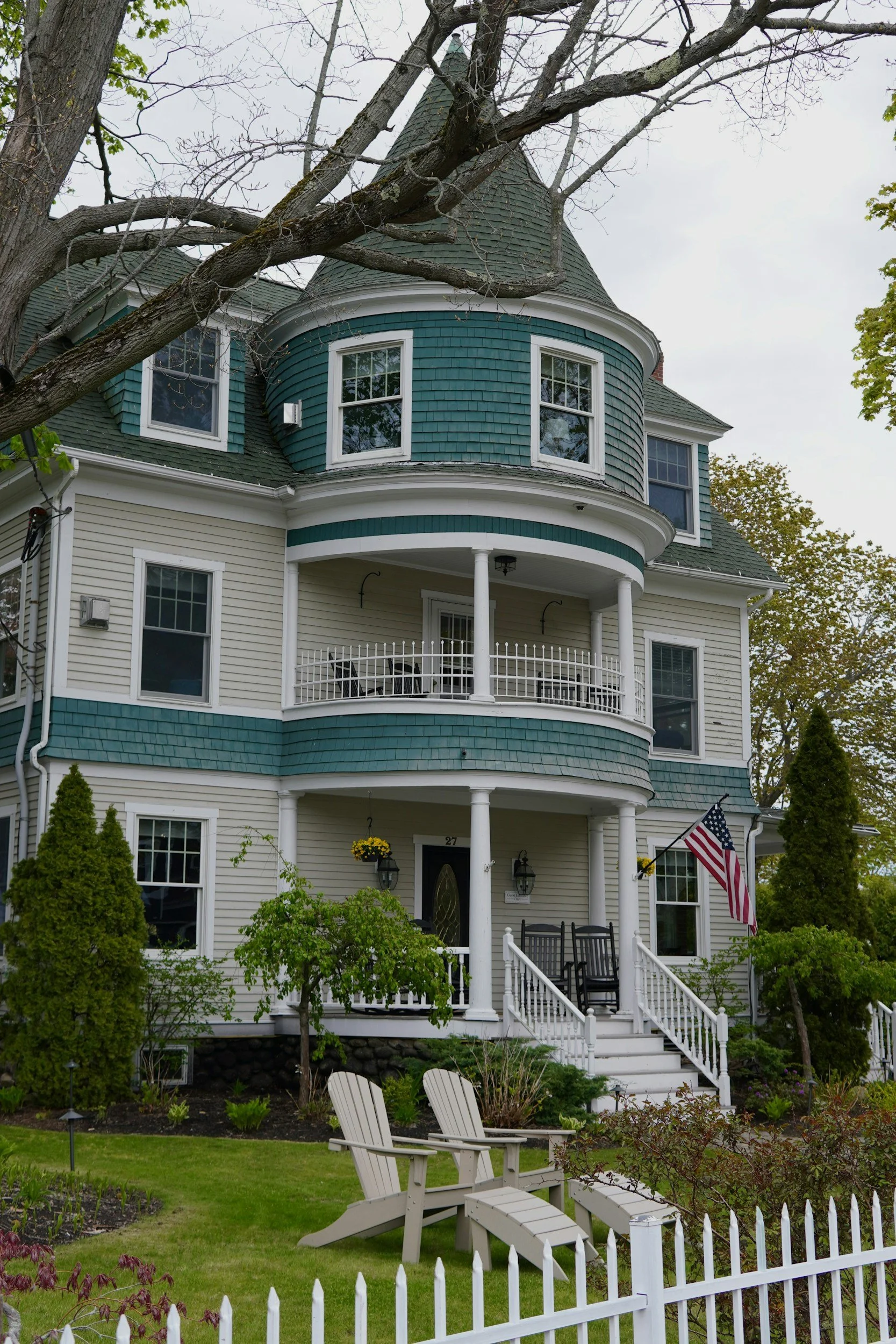
The National Register plaque on a Traverse City Victorian is a compliment. It is not a rulebook.
A National Register listing, on its own, restricts almost nothing about what you do to your own house. You could tear off the porch, wrap the clapboard in vinyl, and paint the whole thing lime green, and the federal government would have no standing to stop you.
What stops you is a city ordinance passed in June of 1981 — and its boundary does not run where most buyers assume it does.
The Line Is Drawn in a Roster, Not on a Neighborhood Map
Traverse City has three local historic districts: Central Neighborhood, Boardman Neighborhood, and Downtown. Their boundaries live in Chapter 1462 of the city code, written out lot by lot and alley by alley, with individual street addresses listed by number.
That’s the part that surprises people. The historic district lines and the neighborhood association lines are not the same lines. Central’s boundary runs along alleys — the alley north of Fifth, the alley south of Eighth — and jogs mid-block more than once.
So yes: two houses on the same street, a block apart, can sit under completely different rules. One answers to a seven-member commission before it replaces a porch. The other just calls a contractor.
What Actually Trips the Review
Three things put you in front of the Traverse City Historic Districts Commission: construction of a new building, moving or demolishing a structure, and any exterior alteration or repair that requires a building permit.
Permit is the trigger word. Repainting doesn’t require one, so paint color isn’t reviewed. Swapping shutters, generally the same. But a new porch, a detached garage, a window package, a roof profile change — those need permits, and permits inside a district need a certificate of appropriateness first.
The threshold is 200 square feet of gross floor area, which is smaller than most people’s shed ambitions.
The commission has seven members appointed by the City Commission. One has to be a registered architect; two come from preservation or historical groups. They judge your plans against the Secretary of the Interior’s Standards for Rehabilitation — a real, published federal standard, though how any given board reads it in any given year is a fair thing to ask about before you buy.
The Three Clauses Nobody Mentions at the Showing
Here’s where a Traverse City historic district stops being a charming detail and becomes a line item.
Demolition by neglect. If the commission finds a resource is deteriorating from neglect, it can order the owner to repair it. If the owner doesn’t, the commission can obtain a circuit court order, enter the property, do the repairs itself, and levy the cost as a special assessment against the property. That’s not a fine. That’s a bill attached to your tax roll.
The $5,000 civil violation. Do the work without approval and it’s a civil violation carrying a fine of up to $5,000 — and a court can separately order you to pay the cost of restoring or replicating whatever you altered. The commission can also simply require you to put it back the way it was.
The 60-day clock, and this one’s in your favor. If the commission fails to act within 60 days of a complete application, the ordinance treats it as approved. Nobody advertises that. It matters a great deal if you’re closing on a rehab with a construction timeline.
The Map Looks Gerrymandered Because It Is
No area becomes a Traverse City historic district without the written consent of 51% of the property owners in it. The process starts with a petition from 20%, then a study, then reports to the Planning Commission, the Michigan Historical Commission, and the State Historical Advisory Council, then a public hearing, then a city commission vote.
Which means the notched, irregular shapes of the Downtown and Boardman boundaries are a record of who said no, decades ago. Those edges aren’t sloppiness. They’re a vote count, frozen into a legal description.
And that process is live again. A group called Traverse City Community Design has been pushing to expand the three existing districts and create two new ones — in Slabtown and Old Town. Same 51% threshold, roughly a two-year path. If you’re shopping either of those neighborhoods, that’s a question worth asking now rather than in year three of ownership.
Is It Good or Bad for Your Money? Honestly, Both
The preservation argument is that predictable streetscapes create a sense of place, and a sense of place supports value. There’s a real case there — the parts of this town people stop to photograph are, disproportionately, the parts with rules.
The other side is just as real. Review adds time. It adds subjectivity: seven rotating volunteers whose standards can drift year to year. And at resale it narrows your buyer pool to people who are fine with all of that.
In 2026’s county numbers make the tradeoff sharper. Through the first half of 2026, 571 homes sold in Grand Traverse County, down from 652 in the same window last year, with total volume falling from $335.1 million to $277.4 million. The median still climbed, to $420,000.
That’s a market where fewer buyers are moving but the ones who do are paying up for the right house — exactly the market where an extra layer of permitting friction deserves to be priced honestly instead of waved off. We’ve written before about why Traverse City prices keep ignoring the national storyline. This is the in-town version of the same idea: scarcity, with strings attached.
Three Questions Before You Write the Offer
Is this address in a local historic district, or just in an old neighborhood? Don’t take “it’s historic” from a listing remark. The roster is printed in the ordinance, address by address. Look it up, or have your agent do it.
What did the last owner do without a permit? Enclosed porches, replacement windows, and vinyl siding are the usual suspects. Unpermitted exterior work in a district follows the property, not the person who did it.
What do you actually want to change, and does it need a permit? If your whole plan is paint and landscaping, the district is close to a non-issue. If it involves an addition, a garage, or a full window package, build review time into your contingency.
This is the same species of problem as an old lake cottage that’s grandfathered but not necessarily rebuildable. The house is legal. What you’re allowed to do next is an entirely separate question.
The Part I Actually Like About All This
Over 25 years working these streets, Janel has watched the in-town neighborhoods come through a couple of complete market cycles with their character basically intact, and that isn’t an accident. The ordinance’s stated purpose, right there in the 1981 text, includes stabilizing property values and fostering civic beauty. It’s rare to see a preservation rule admit out loud that it’s partly about money.
I’d just rather buyers walk in knowing the rules than fall in love with a porch in July and find out in March. Nobody has ever regretted asking the question early.
So if you’re looking at anything in-town — Central, Boardman, Slabtown, Old Town — send me the address before you get attached. I’ll tell you which side of the line it’s on and what that means for whatever you’re planning. You can also browse what’s currently listed or read more about living in Traverse City.
Taylor Brown, Realtor
(231) 360-1510
