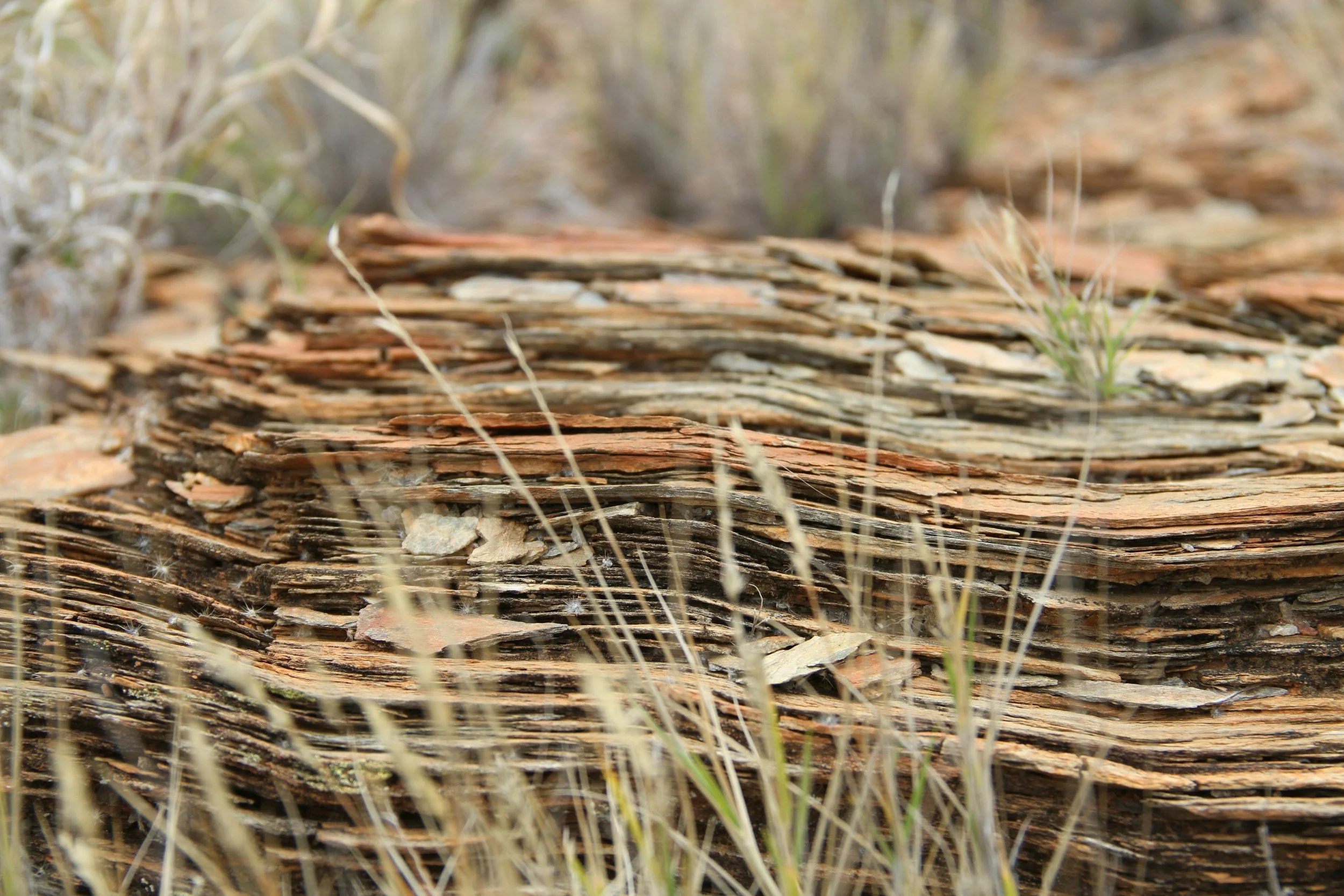
Antrim County didn’t just get a shale formation named after it. It got the one that turned into the most actively drilled shale gas play in America.
A geologist named A.C. Lane defined the Antrim Shale in 1901 off outcrops right here in Antrim County. Nine decades later that formation went off like a bottle rocket — more than 9,000 wells, more than 2.5 trillion cubic feet of gas pulled out of it, and by 2007 it ranked as the 13th-largest natural gas field in the United States.
Michigan’s seller’s disclosure statement asks about all of that exactly once. Item 12. “Mineral rights: Do you own the mineral rights?” Three boxes: unknown, yes, no.
Take a wild guess which one gets checked.
The most-checked box in Michigan real estate
I’m not being cute about that. Michigan’s Seller Disclosure Act (MCL 565.956) says in plain text that if an item is unknown to the seller, the seller complies with the law by saying so. Check “unknown,” you’re done — legally, ethically, fully compliant.
And most sellers genuinely don’t know. Mineral severance doesn’t show up on your tax bill, your homeowner’s policy, or your survey. It lives in the chain of title, sometimes four owners and seventy years back, in a deed nobody has pulled since Eisenhower.
So the one line on the form that’s supposed to warn you about this is, in practice, a shrug.
Michigan owns what’s under 2.3 million acres of somebody else’s land
Here’s the part that surprises people. The Michigan DNR manages over 6.4 million acres of mineral rights — and almost 2.3 million of those acres sit under land where somebody other than the state owns the surface.
That isn’t sinister, it’s history. Most of those rights were picked up by the state between 1920 and 1940, when property went tax-reverted during the Depression. When the state later resold that land, standard practice was to keep the minerals.
Northern Michigan got hit hard by that era. Cutover timber land, failed farms, forty-acre parcels nobody paid taxes on for a decade — that describes a real share of the ground between here and Kalkaska. A lot of it went back out the door with the surface and the subsurface pointed at two different owners.
“Dominant estate” is a phrase worth understanding before closing
Once minerals are severed from the surface, Michigan common law treats the mineral estate as the dominant estate and the surface as the servient one. The DNR’s own Office of Minerals Management says it out loud: a mineral owner “typically has the right to reasonable use of the surface as necessary to extract minerals.”
Read that again with your driveway in mind. The mineral estate carries an implied easement to use as much of your surface as is reasonably necessary to reach what’s underneath.
“Reasonably necessary” does a lot of work in that sentence, and nobody is parking a rig in your kitchen. But it means the answer to “wait, can they actually do that?” is not automatically no.
The other half people miss: royalties follow the minerals, not the surface. If gas comes out from under your forty, the check goes to whoever owns the mineral estate. A surface owner can negotiate a separate payment for use of the ground — but that’s a negotiation, not a right.
The 20-year escape hatch, and the exception that eats it
Michigan does have a fix, and it’s a good one. The Dormant Minerals Act (MCL 554.291) says a severed oil and gas interest is deemed abandoned if, for 20 straight years, nobody sells or leases or mortgages it, nobody pulls a drilling permit, nothing is actually produced, and nobody records a notice of interest at the register of deeds. Sit on it silently for two decades and the oil and gas rights revert to the surface owner.
Good law. Now the two asterisks.
One: it only covers oil and gas. Sand, gravel, limestone, salt, metallic minerals — different animal. Those severed rights don’t fall to the surface owner under the Dormant Minerals Act; they revert to the last owner in the chain of title. Around here, where a good gravel deposit is genuinely worth money, that distinction isn’t academic.
Two, and this is the big one: neither the Dormant Minerals Act nor the Marketable Record Title Act applies to governmental entities. The DNR states that flatly in its own public materials. So if the party holding the minerals under your parcel is the State of Michigan — which, again, is the case under nearly 2.3 million private-surface acres — the 20-year clock does you exactly no good. It never runs out.
Where this actually bites in our market
Two places, and both are the kind of thing that catches people off guard up here.
The first is acreage. The Antrim Shale is shallow, most economic between roughly 600 and 2,200 feet, developed on 40- to 160-acre units, and its productive trend runs across the northern Lower Peninsula through Antrim, Otsego, Crawford, Montmorency, Oscoda and out toward Kalkaska. If you’re buying forty wooded acres east of US-31, you’re shopping inside that story whether anyone mentions it or not.
The second is vacant land, and this one is structural. The Seller Disclosure Act only applies to transfers of property with 1 to 4 residential dwelling units (MCL 565.952). Raw land isn’t covered. So on the exact kind of purchase where severed minerals matter most, that thin little line on the disclosure form doesn’t exist at all.
Same lesson as the perc test: with vacant land, nobody hands you the homework. And it stacks with the other things that quietly ride along with Northern Michigan acreage, like the forest tax programs that can come attached to a parcel you assumed was a blank slate.
Work enough land deals up here and you start reading Schedule B of the title commitment the way other people read a home inspection report. Janel has been writing offers in this market for twenty-five years, and the exceptions page is where the actual surprises live — not the pretty pages up front.
The Severance Check
Three questions. Ask them before you write the offer, not after the inspection.
1. Does the title commitment except the minerals — and is anyone reading that page out loud? Severed minerals appear in Schedule B as an exception, in language dry enough to skim right past. Ask your title company directly: are the oil, gas and mineral rights included in what I’m buying? Make them answer in a sentence, not a paragraph number.
2. If they’re severed, who holds them — a person, a company, or the state? This determines everything. A private holder can be located, negotiated with, sometimes bought out. If it’s the State of Michigan, there’s a formal purchase program you can pursue, but the dormancy clock is never going to bail you out.
3. Is there a recorded lease, and when was the last activity? A recorded oil and gas lease means somebody is at least thinking about it. Twenty-plus years of total silence in the record is the setup for a Dormant Minerals Act claim — a conversation for a real estate attorney rather than a blog post, but worth knowing the claim exists.
None of that takes long. Question one is a phone call. Questions two and three are a title search your closing agent is already halfway through.
The next version of this problem is already in Lansing
Here’s the forward-looking piece. The Michigan Senate has passed a package of carbon sequestration bills — SB 394, 395 and 396 — that would hand EGLE, rather than the EPA, the job of permitting projects that inject CO2 into deep rock formations. The package moved to the House this spring.
The interesting part for landowners: the framework requires notice to all surface owners of land above a proposed storage reservoir, creates pooled “unit areas” of interests in pore space, caps operator fees at 32 cents per ton of CO2, and sets up a Community Benefits Fund whose money can only be spent on grants to those surface owners.
Translated: the empty space in the rock a half-mile under your property is on its way to becoming a thing with a value and a paperwork trail. Which means we’re about to have an entirely new version of this conversation — and the disclosure form still has exactly one line about what’s underneath.
The point
Nobody should walk away from a beautiful forty because the minerals were severed in 1937. Severed mineral rights are common up here, the large majority will never be developed, and plenty of gorgeous Northern Michigan property has been bought, loved and handed down with this exact footnote sitting quietly in the title work.
The point is knowing before you sign — not because it’s likely to blow up your deal, but because “surprise, you don’t own what’s underneath” is a rough thing to learn in year three.
If you’re looking at land up here and want somebody to actually read the exceptions page with you, that’s a thing we do. Have a look at what’s currently on the market, or just call and ask.
Taylor Brown, Realtor
Taylor@taylorbrownrealtor.com
