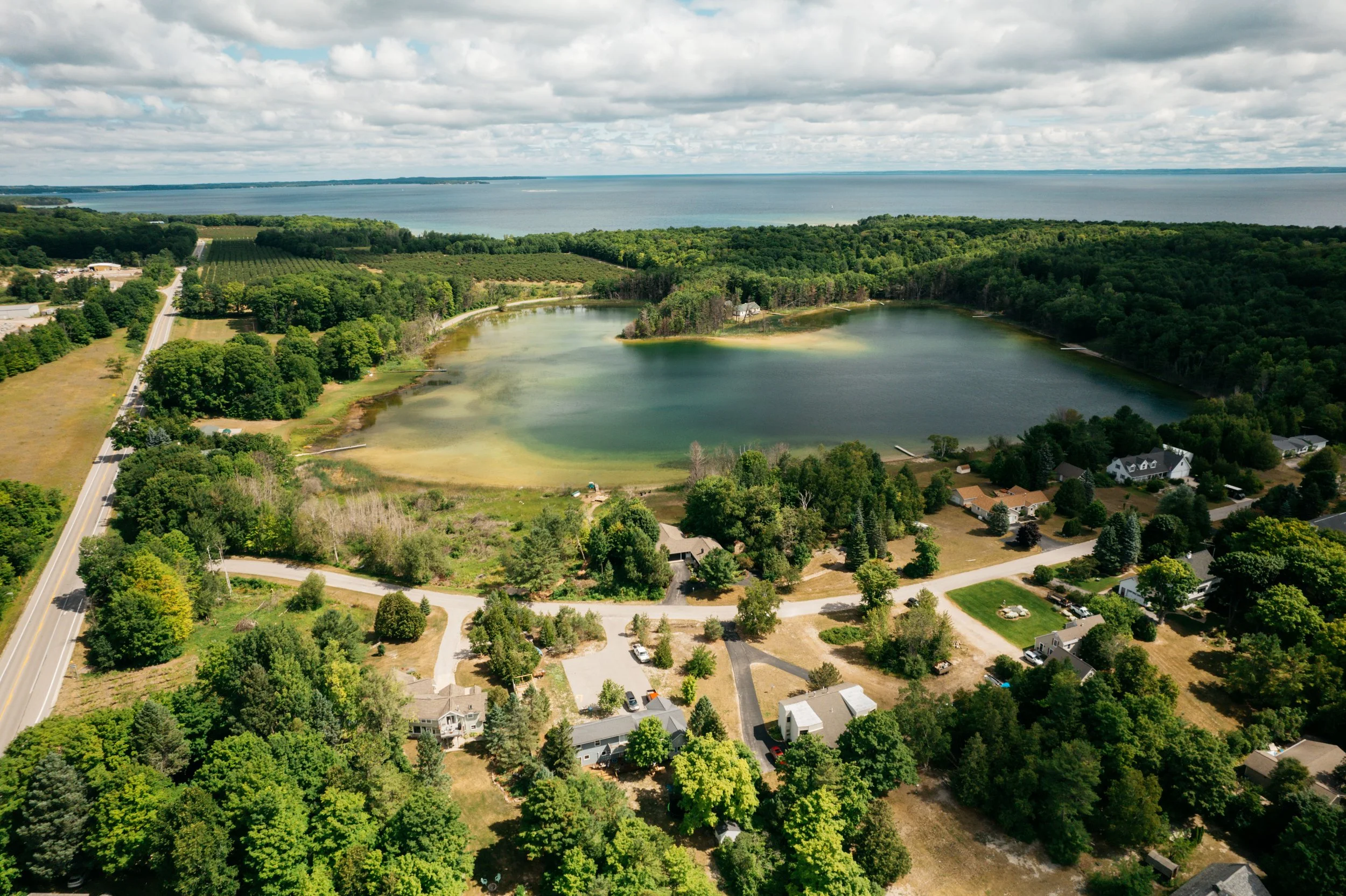
The allure of Northern Michigan real estate is inextricably tied to the landscape, the winding curves of M-22, the hardwoods of the Leelanau Peninsula, the quiet ridges of Williamsburg. For buyers seeking a true retreat, that usually means leaving the municipal pavement behind. A private drive offers unmatched tranquility, but it also introduces a real matrix of legal, financial, and logistical variables worth understanding before you fall in love with the driveway.
The Legal Foundation: Easements and Maintenance Agreements
In Michigan, a private road is established through a recorded appurtenant easement, a legal right to cross another's property to reach your own. Without it, a property is effectively landlocked: unmarketable and ineligible for traditional financing. That easement grants access, but a Road Maintenance Agreement (RMA) is what dictates who actually pays the bills. In many local townships, an RMA is now required before a building permit or land division is approved.
The reality, though, is that many legacy Northern Michigan properties still operate on informal handshake agreements. That's fine until a spring washout requires a $10,000 fix and suddenly nobody agrees on who owes what. If there's no recorded RMA, factor in the potential for neighbor friction, and price your offer accordingly.
One bright spot for veteran buyers: in 2022, the VA officially rescinded its requirement for a joint maintenance agreement. Today, VA loans only require proof of a recorded permanent easement, which opens up a lot of rural Northern Michigan properties that were previously difficult to finance.
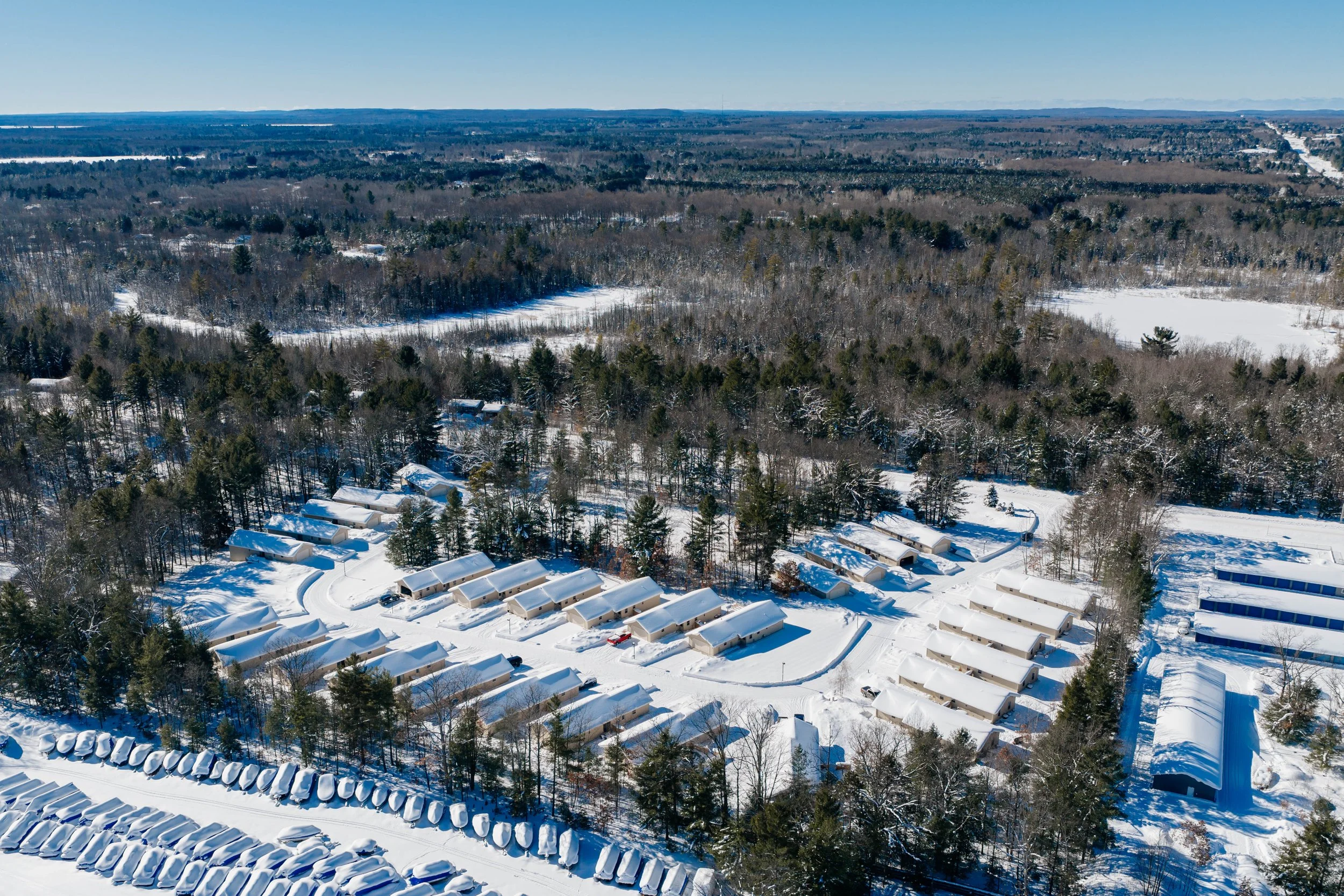
A Northern Winter Is Not Forgiving
When lake-effect snow rolls in off Grand Traverse Bay, the County Road Commission focuses on state trunklines and emergency routes. Your private road is entirely your problem. That means a snow removal contract is a mandatory holding cost, budget $125–$175 per month at minimum, more for steep or complex drives.
Ice is the other half of the battle. Standard rock salt loses effectiveness in deep freezes, so steep or shaded driveways often require a treated mix of salt, sand, and liquid deicer. A north-facing driveway under a dense pine canopy is a fundamentally different maintenance proposition than a flat, open road, something to assess carefully before closing.
Spring Is Harder on Roads Than Winter
The most destructive force on a gravel road isn't snow, it's snowmelt. Poorly engineered gravel roads succumb quickly to ruts, mud, and washouts. A resilient road needs a compacted base of "23A processed gravel," a pronounced crown in the center to shed water, and functioning drainage ditches along the sides. If you're walking a property in spring and see standing water or a flat, rutted surface, a significant repair bill is likely in the near future. Gravel resurfacing can run $50,000–$75,000 per mile for a full rebuild.
The Neighbor Problem
The trickiest variable on a private road often isn't the road itself, it's the people sharing it. Without a formal RMA, there's no legal mechanism to force a neighbor to contribute to repairs or upgrades. If three households want to pave and two don't, the three pay for all of it. If someone refuses to chip in for basic grading, the others cover it or live with a deteriorating road. A recorded RMA with clear cost-sharing language is what gives everyone (including you) actual legal standing.
Daily Life Logistics
A few practical realities worth knowing: emergency vehicles require a minimum 16-foot overhead clearance and 12-foot width, overhanging branches aren't just aesthetic. School buses won't travel a dead-end private road without a proper engineered turnaround, which means kids may walk to the public road regardless of weather. Trash haulers may refuse service on poorly maintained drives. And the USPS can redirect your mail to a cluster box at the main road if conditions warrant it. None of these are dealbreakers, but they're worth knowing before closing day.
Liability
Owning a private road comes with real legal exposure. Michigan landowners have a duty to maintain their property in a reasonably safe condition. The "open and obvious" doctrine offers some protection, a visible pothole in broad daylight is different from a sheet of glare ice on the only way in or out. That second scenario can absolutely result in liability, even if the hazard seems obvious. A solid umbrella insurance policy and a clear maintenance plan are the last pieces of protecting what is otherwise a genuinely great investment.
Private road properties are some of the most compelling real estate in Northern Michigan, they just require a little more due diligence than a subdivision lot. If you're evaluating one and want to talk through the specifics, I'm happy to dig in with you.
