Written in September 2026. The market numbers below are from that month and have moved since, so ask us for today's.
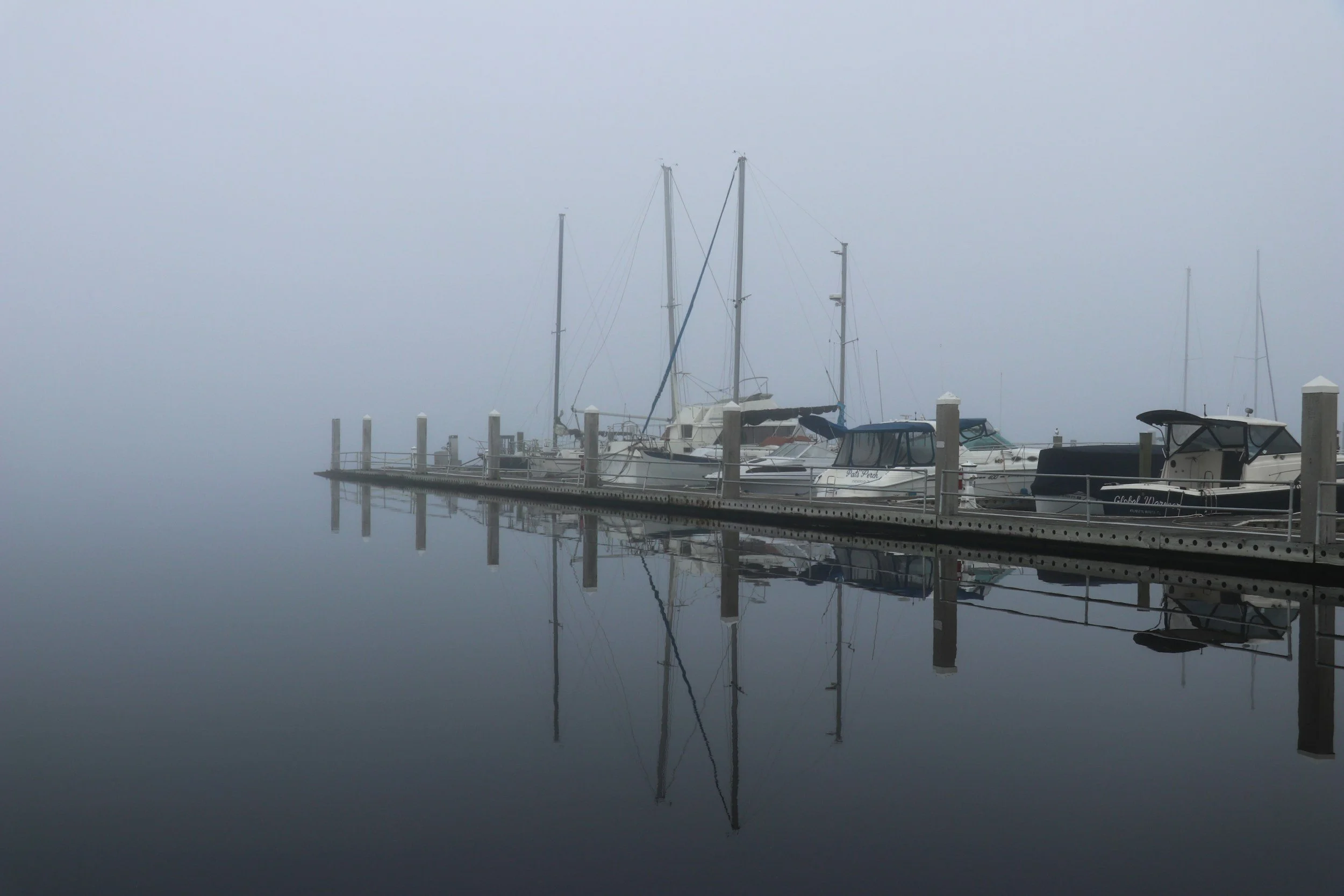
M-22 ends in Northport. Not at a scenic overlook, not at the lighthouse. It just turns into a village street a block from the marina and stops being a state highway. The Grand Traverse Lighthouse and Leelanau State Park are another eight miles up County Road 629, past the point where most day-trippers have already turned around.
That geography explains a lot about how Northport prices. It's the last town on the peninsula, 30 miles from Traverse City on a road with no passing lanes, and around 500 people live there year-round (496 in the 2020 census). It is also the only place in the north half of Leelanau County where you can buy a house in town and not think about a septic tank, and that one fact changes what you can do with a property more than anything in the listing photos.
Why a town of 500 has a sewer plant
In 2005 the village council voted to build a roughly $12 million sewage treatment system. The assessment worked out to about $10,000 per lot plus a $5,000 connection fee per customer, in a town where a lot of the year-round residents were retirees on fixed incomes. There was a recall vote in 2006. The council survived it, partly because the DNR had said it would not permit a septic system for the marina. The plant turned on in 2008 and the system was fully running by 2009.
People in Northport still have opinions about this. I have heard both versions, that it saved the town and that it priced people out of it, and I think both are partly right. Downtown storefronts filled back in after the sewer went live. So did the tax bills.
The system is run by the Northport/Leelanau Township Utilities Authority, which everyone calls the NLTUA. Jacobs has operated it under contract since 2008. The plant's design flow is 132,000 gallons a day and it is permitted to discharge up to 405,000 gallons a day to groundwater. Those two numbers matter for what comes next.
The 2026 capacity study
In spring 2026 the NLTUA had Jacobs do a formal capacity evaluation of both the plant and the collection pipes. The technical memo is dated May 20, 2026 and it's posted on the village website under NLTUA, filename NLTUA_Capacity-Analysis-Study_TM_2026-05-20.pdf. It is 60-some pages and most of it is about biofilm reactors, but a few findings are worth knowing if you're buying in the village.
The biological side of the plant has room. Jacobs modeled it as able to handle up to a 2.5-fold increase in maximum-month pollutant loads. But the plant cannot take an increase in peak flows as of September 2026 because of hydraulic limits in the polishing filters and a 3-inch effluent flow meter. The secondary solids separation equipment is described as likely already overloaded. So the plant can treat more sewage in theory, and can't physically move more of it through on a busy July weekend without upgrades.
The collection system findings are the ones I'd read twice. Under dry weather everything is fine. Under a modeled 2-year or 5-year storm, the memo projects surface flooding at manholes and basement backup risk for houses along North Mill Street, North and South Shore Drive, North Bay Street and South Shabwasung Street. If you're looking at a house with a finished basement on one of those streets, that is a question for your inspector and for the NLTUA clerk (231-386-5182, ext. 10), and I would ask it before you write the offer, not after.
The other thing in the memo is a note that EGLE may someday add a total inorganic nitrogen limit as low as 5.0 mg/L to the discharge permit, and that the plant would not meet that limit under current operations. Nobody knows when or if that happens. I don't. But it's the kind of thing that turns into a special assessment ten years out, and buyers who lived through the 2005 assessment will tell you exactly how that feels.
What the sewer means for what you can build
Sewer capacity in the village is billed in Residential Equivalent Units. A single-family house is 1.00 REU. An accessory building with its own living space is 0.50. A bed and breakfast is 1.00 plus 0.10 per sleeping room, a restaurant is 1.00 plus 0.03 per seat. The full schedule is Exhibit A to the NLTUA Rules and Regulations, also on the village site.
Why should a buyer care about a utility rate table? Because in most of Leelanau County, the number of bedrooms you can have is decided by the Health Department based on your septic field, and adding a bedroom or a guest cottage means a new soil evaluation and often a new drainfield. Inside the village of Northport that constraint mostly disappears. You pay for another half an REU and the sewer takes it. That's a big part of why village lots that would be unbuildable on septic (small, or close to the bay with a high water table) have houses on them.
Leelanau Township also ties short-term rental occupancy to bedrooms approved on a Health Department permit, with a hard cap of 15 guests over age five, specifically to keep septic systems from being overloaded. The township caps STR permits at 150 per calendar year and they're issued to the owner, not the property, so they don't come with the house. Inside the village it's a different process: rentals under 21 days need registration and a new STR use goes through Special Use and Site Plan Review with the planning commission. There's one on the agenda as of September 2026 for a property on East 7th Street. If you're weighing a rental up here, the township-by-township STR guide has the details for both jurisdictions, and I'd read the village and township sections separately because they are not the same rules.
Housing
Northport is having the same attainable-housing argument every small town up here is having, just louder because the town is smaller. The village and Leelanau Township set up a joint housing task force in 2025. There was a fight over Buster Dame Park being floated as a housing site, and residents dug up DNR grant restrictions and an easement that appear to block that. The township has since put out a request for proposals for roughly 3.5 acres of a 5-acre parcel at 824 N. Warren, and the village owns a 1.1-acre vacant lot on West Street zoned R-2 that Peninsula Housing has said it's interested in, with an 89-year ground lease model that would prohibit STRs on those homes.
None of that is built yet. I'd treat it as background on where the village is heading, not as something that changes a purchase decision in fall 2026.
What it costs
Northport list prices in August 2026 ran around a $795,000 median with about 88 median days on market, and Zillow's average sits closer to $707,000. Those numbers get pulled around hard by a handful of Northport Point and bayfront listings, so I wouldn't lean on them for a specific house. What I can tell you from working the north end is that a plain in-village house on sewer with no water view is a different product from the same house in Omena or on a two-track off 629 with a septic tank, and it should be compared to Suttons Bay village stock (also on municipal sewer) before it gets compared to the rest of the township.
The school is Northport Public School, one building, K through 12, somewhere between 125 and 150 kids depending on which year's count you use. Some families love that. Some drive to Suttons Bay. You should know which you are before you fall for a house.
And the drive. It's 30 miles from Front Street, 45 minutes on a good day and more when color-tour traffic is crawling through Suttons Bay or when 22 is glare ice north of Omena in January. This is the part of the peninsula where "year-round" means you've thought about a generator and about where you'd grocery shop in February (the market in town is small; most people run to Suttons Bay or TC for a big trip).
If you want to see what's on the market up there, the current listings page is the easiest place to start. If you want to know whether a specific house is on sewer, what its REU count is, or whether it's on one of the streets in that flood model, send me the address and I'll pull it.
Taylor Brown, Realtor
Taylor@taylorbrownrealtor.com
