Written in April 2026. The market numbers below are from that month and have moved since, so ask us for today's.
Nine bipartisan bills are sitting in Lansing as of April 2026 that would make duplexes and accessory dwelling units legal on every single-family lot in Michigan — no special permit, no public hearing, no zoning variance. If you own property anywhere in Northern Michigan, this is worth paying attention to.
The Bills Nobody's Talking About at the Coffee Shop
Here's the quick version. The Michigan Housing Readiness Package — led by a Republican from Clinton Township and a Democrat from Grand Rapids — includes nine bills designed to strip away what they're calling regulatory red tape in residential construction. The headline provisions:
HB 5584 would make duplexes a permitted use in any zone where single-family homes are allowed. Not a conditional use. Not a special exception. Permitted, full stop.
HB 5585 would legalize accessory dwelling units — think backyard cottages, in-law suites, converted garages — by right on any residential parcel. No public hearing required.
HB 5581 caps minimum dwelling sizes at 500 square feet, overriding local ordinances that require bigger builds.
HB 5529 sets a maximum lot-size minimum of 1,500 square feet for single-family homes on public water and sewer.
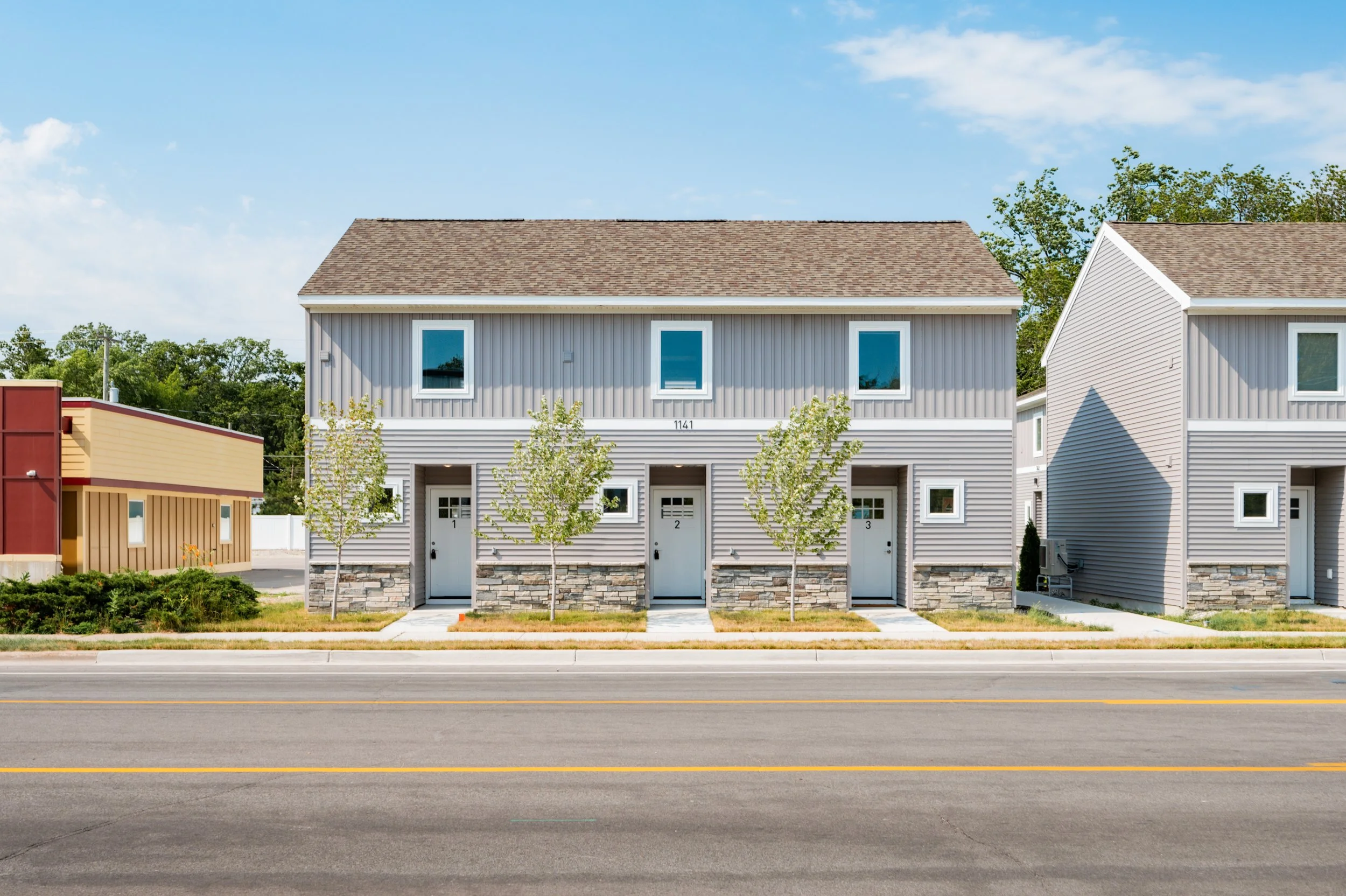
Do the math on the first two alone: one duplex plus one ADU means three homes could legally sit on a lot that currently allows one. That's not a hypothetical — that's what the legislation as written would permit.
Why This Matters More Up Here Than Downstate
In metro Detroit or Grand Rapids, these bills are mostly about housing supply and affordability. Those are real issues. But up here in Northern Michigan, the dynamics get a lot more complicated.
Traverse City has exactly 66 acres zoned for density beyond duplexes. Sixty-six. The city's own housing needs assessment identifies a shortfall of over 2,200 units — roughly 1,010 rentals and 1,192 for-sale homes that simply don't exist yet. We've written before about how Traverse City home prices continue to defy national trends, and the reason is pretty simple: there's nowhere near enough housing for the number of people who want to live here.
So on paper, legislation that makes it easier to build sounds like exactly what we need. And in some ways, it is. But Northern Michigan isn't metro Grand Rapids. We have well and septic systems instead of municipal water. We have private roads that can barely handle the traffic they've got. We have resort communities where the character of the neighborhood isn't just aesthetic — it's the entire economic engine.
The Three Scenarios I Keep Thinking About
When I read through these bills, three very different scenarios jump out depending on where you own property.
Scenario 1: In-town Traverse City. This is where the bills probably make the most sense. TC proper has public water, public sewer, sidewalks, and a desperate need for more housing. A homeowner on Wellington Street converting a detached garage into a 600-square-foot rental? That's genuinely helpful. A duplex replacing a teardown bungalow on Eighth Street? The neighborhood probably doesn't blink. The city has already been moving this direction — commissioners recently voted to allow up to four units per lot in R-2 zones. These bills would just accelerate what's already happening.
Scenario 2: Leelanau Peninsula. Now it gets interesting. There are 55 homes for sale in all of Leelanau County on any given week. The median price hit $715,000 in January. Most properties are on well and septic. Under these bills, someone could theoretically build a duplex plus an ADU on a residential parcel in Cedar or Lake Leelanau without any special approval. The lot-size provisions (1,500 square feet) wouldn't kick in since there's no public sewer, but the duplex-by-right and ADU provisions would still apply. For a peninsula that's been fiercely protective of its rural character, that's a big shift — and honestly, some of that protectiveness has contributed to the affordability crisis in the first place.
Scenario 3: Resort and Waterfront Communities. This is where things get genuinely tricky. Think about a neighborhood on Old Mission Peninsula or along the shores near Glen Arbor. If duplexes are permitted by right, what stops a waterfront lot from becoming a duplex with an ADU — three units on a lot that was zoned for one? And in areas already wrestling with short-term rental pressures, more units could mean more vacation rentals, not more workforce housing. The bills don't distinguish between year-round residents and seasonal operators.
The $95,000 Elephant in the Room
Here's the number the bill sponsors keep citing: the average Michigan home carries $95,000 in regulatory costs before a single nail gets driven. That includes everything from permitting delays to impact studies to minimum-size requirements that force builders to construct bigger (and more expensive) homes than the market needs.
That number lands differently up here. We've talked about the death of the budget build in Northern Michigan, and the reality is that between land costs, labor shortages, and material prices, you're lucky to build anything for under $350 a square foot. Reducing regulatory overhead won't magically make construction affordable, but it removes one layer of cost in a market where every layer matters.
The 500-square-foot minimum is particularly interesting for our area. As of April 2026, several townships around Traverse City require minimum home sizes of 900 to 1,200 square feet. That effectively bans the kind of small, efficient starter homes and cottages that Northern Michigan was literally built on. Drive through any established neighborhood in Williamsburg or Grawn and you'll see perfectly good 700-square-foot homes that couldn't legally be built today under current local codes. There's something broken about that.
Where the Local Control Fight Gets Real
The Michigan Municipal League and Michigan Townships Association are both pushing back hard on these bills, and their core argument is about local control. Townships and cities have historically used zoning to shape their communities, and these bills would override those decisions from Lansing.
That argument resonates up here — probably more than anywhere else in the state. We're not suburban subdivisions where every lot looks the same. Our townships are managing complex landscapes: agricultural preservation, environmentally sensitive shorelines, seasonal population swings, and infrastructure that wasn't designed for density. A one-size-fits-all mandate from Lansing doesn't account for the difference between a parcel in downtown TC and a 10-acre plot in Kasson Township.
But here's the uncomfortable flip side: local control is also what gave us minimum lot sizes that made affordable housing impossible, single-family-only zoning that locked out younger buyers, and approval processes so slow that builders gave up and moved to other markets. Janel has been in this business for over 25 years, and the conversations about housing shortage in this area aren't new — they've just gotten louder because the consequences are harder to ignore.
So Will This Actually Pass?
The short answer: some version of it probably will, but not in its current form.
The bills have genuine bipartisan support — co-led by a Republican and a Democrat, which matters in Lansing. Governor Whitmer has been pushing housing reform hard, including in her 2026 State of the State address. The Michigan REALTORS association is actively lobbying for it. And the underlying problem — Michigan needs more housing — isn't really contested by anyone on either side of the aisle.
But the opposition is real and well-organized. The Michigan Municipal League and Michigan Townships Association carry significant weight with state legislators, especially ones who represent rural and suburban districts. They've launched petition campaigns to protect local decision-making, and that kind of organized pushback typically forces significant amendments before anything reaches the floor.
The most likely outcome? The ADU legalization and minimum dwelling size cap probably survive mostly intact — those are less controversial and have broader support. The duplex-by-right provision (HB 5584) is the one most likely to get amended with carve-outs for rural areas, communities on well and septic, or places below certain population thresholds. The lot-size minimum could also get narrowed.
The national trend is clearly moving this direction — Oregon, California, and Minnesota have already passed similar "missing middle" housing reforms. Michigan is following a well-worn path, which makes eventual passage more likely than not. But these bills were introduced in February, they're still in committee, and given the opposition, we're probably looking at late 2026 at the earliest for any vote — potentially pushing into 2027.
What This Meant for Buyers and Sellers in April 2026
If you're a current homeowner, don't panic. These bills are introduced, not enacted. They face significant opposition from local government groups, and even the sponsors acknowledge amendments are likely. The legislative process has a way of softening the sharpest edges.
If you're a buyer, especially a first-timer trying to crack into this market, the ADU provisions are the most immediately interesting. Buying a home with enough lot space to eventually add a rental unit — or buying a property where an ADU already exists — could become a much more viable strategy if these bills pass.
If you're thinking about investment property, pay attention. Duplexes by right changes the math on a lot of residential parcels. A single-family home on a decent lot in the right location suddenly has a different highest-and-best-use calculation. That doesn't mean you should rush out and buy — it means you should be watching how this legislation moves through committee.
And if you're a seller in a township that's been particularly restrictive on density, it's worth considering how loosened zoning might affect comparable sales in your area over the next few years. More buildable options on neighboring lots can cut both ways — more demand for the area, but also more supply to compete with.
The Bottom Line
These bills are trying to solve a real problem. Michigan needs more housing, and Northern Michigan needs it desperately. But the details matter enormously, especially in communities where well capacity, septic limitations, road conditions, and neighborhood character create constraints that a statewide law can't fully account for.
My honest take? Some version of this legislation probably needs to pass. The status quo isn't working — we see it every day in this market. But I'd love to see provisions that account for infrastructure realities in rural and resort areas, and I'd love to see local governments get ahead of this by proactively zoning for the housing their communities need instead of waiting for Lansing to do it for them.
We'll be tracking these bills as they move through committee and keeping you posted on what passes, what gets amended, and what it means for buying and selling in our market. If you want to talk through how any of this affects your specific situation, that's literally what we're here for.
Taylor Brown, Realtor
Taylor@taylorbrownrealtor.com
(231) 360-1510
@listwiththebrowns
