Traverse City Is Pouring Over $120 Million Into Downtown. Here's What That Means for Your Property.
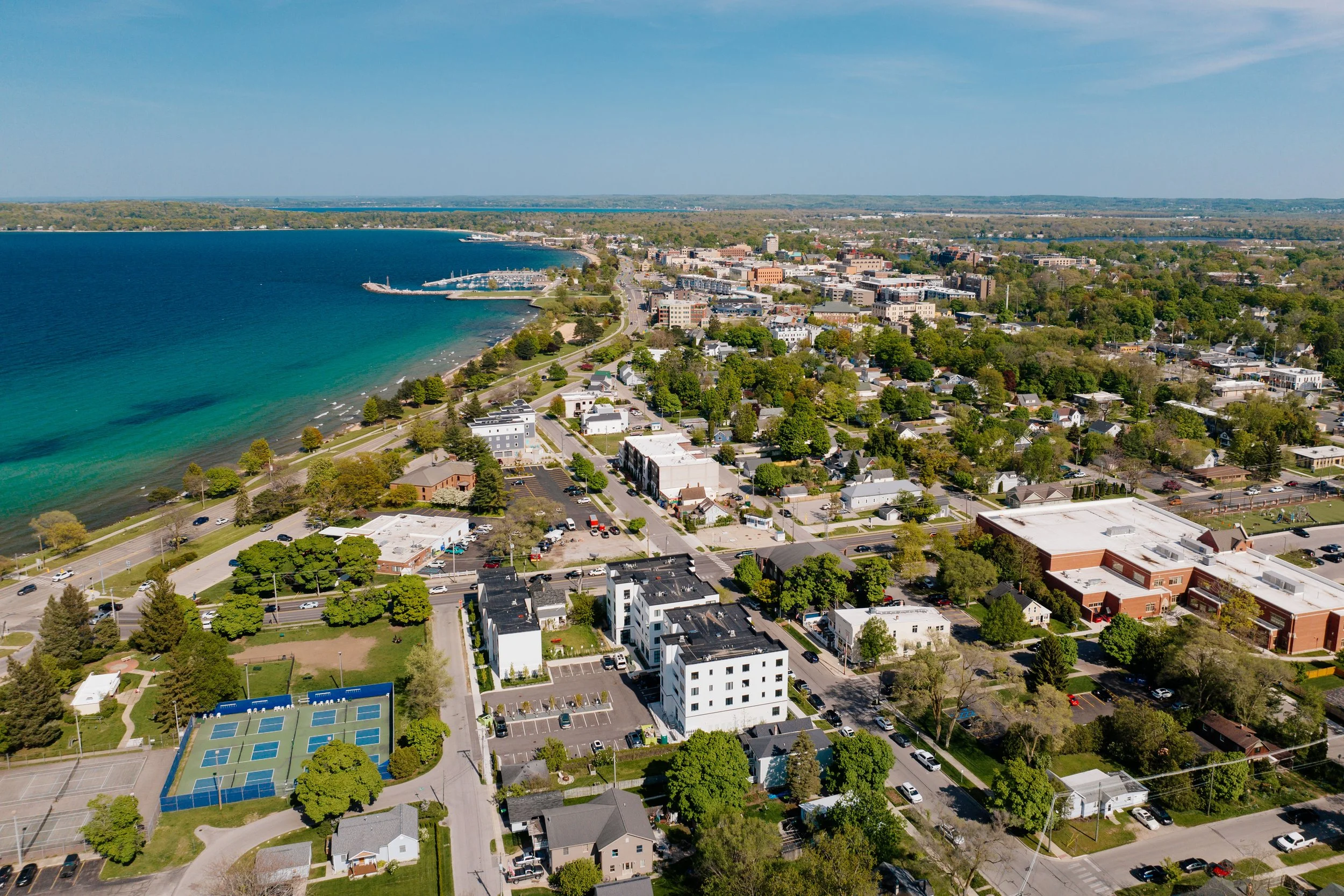
Thirteen capital projects. A $5.7 million riverwalk. A $3 million farmers market rebuild. A district-wide snowmelt system. And 500 Hagerty employees walking back into downtown offices three days a week. If you own property anywhere near downtown Traverse City right now, you should be paying attention.
I spend a lot of time driving around this area — it's kind of the job description — and the amount of construction activity ramping up this spring is unlike anything I've seen. This isn't just a pothole repair budget. This is Traverse City making a serious, long-term bet on what downtown looks like for the next 20 years. And when a city puts this kind of money into walkability, public spaces, and infrastructure, property values tend to follow.
The Projects That Actually Matter
Let's start with the big one most people haven't heard about yet. The Boardman River riverwalk is getting a complete overhaul — we're talking nearly $5.75 million for a new pedestrian bridge over the Boardman, reconstructed walkways, stormwater management, and habitat restoration along the river corridor. Schematic design was approved back in January, and this thing is moving. If you've ever walked the J-Smith Walkway downtown, that whole experience is about to level up significantly.
Then there's the Sara Hardy Farmers Market pavilion — just over $3 million to expand from 74 to 113 vendor booths, plus real shelter, electrical power, running water, and lighting. Construction starts after Cherry Festival this summer with a ribbon-cutting targeted for fall 2026. For anyone who's stood in the rain at the Saturday market pretending their pastry isn't getting soggy, this is long overdue.
Rotary Square is next in line at $2.55 million, with construction kicking off in late summer or fall once the market pavilion wraps up. Front Street is getting buffered bike lanes between Pine and Boardman, with traffic calming through narrowed drive lanes. Monroe Street — from Front down to the bay — is getting a full reconstruction from April through November this year, complete with bump-outs, parking on both sides, and bioswales for green stormwater management.
And then there's the one that sounds almost futuristic: a district-wide snowmelt system. Pieces of it already exist under parts of State Street, the parking garages, and Clinch Park, but the DDA is working toward expanding heated sidewalks across downtown. If you've ever tried to navigate an icy Front Street sidewalk in January, you understand why this matters — and why it's a legitimate quality-of-life differentiator for a northern town.
Why 500 Downtown Workers Changes Everything
Here's the piece that doesn't get enough attention. Hagerty — the classic car insurance company headquartered right here — started bringing 500 employees back to their downtown offices on a Tuesday-Wednesday-Thursday hybrid schedule starting in March. Their main headquarters at 121 Rivers Edge Drive plus overflow space in the Chase Bank building at 250 East Front Street means hundreds of people walking downtown, eating lunch, grabbing coffee, and generally putting economic energy back into the core of the city.
We saw what happened when remote work hollowed out downtowns in 2020 and 2021. Restaurants struggled. Retail foot traffic dropped. The ripple effects hit Traverse City real estate in subtle ways — fewer people wanting to live within walking distance of a downtown that felt quieter than it should. That pendulum is swinging hard in the other direction now.
When you combine 500 returning workers with $120 million in infrastructure improvements and a farmers market that's about to nearly double its vendor capacity, you're looking at a downtown that's going to feel noticeably different by this time next year. That's the kind of thing that drives demand for walkable neighborhoods — the ones within a bike ride or short drive of all this activity.
Meanwhile, at Chums Corner
On the other end of the spectrum, Meijer is breaking ground on a 160,000-square-foot supercenter on a 33-acre site west of Menards near Chums Corner in Blair Township. Gas station, drive-through pharmacy, garden center, the whole deal. Love it or hate it, big box retail tends to pull residential development in its direction. The US-31/M-37 corridor south of town has been steadily growing for years, and a Meijer anchoring that stretch is going to accelerate things.
For anyone looking at homes in Williamsburg or along the South Airport Road corridor, this is worth watching. New retail infrastructure means more convenience, which means more buyer interest, which means prices that have room to move. It's a pretty straightforward equation.
The "Follow the Concrete" Rule
Here's something Janel has said for years that I think about a lot: follow the concrete. When a city or township starts pouring money into sidewalks, roads, and public spaces, property values in those areas tend to rise within three to five years. It's not glamorous analysis, but it's remarkably consistent. The neighborhoods that benefit most aren't always the obvious ones — it's the adjacent areas that suddenly become more desirable because they're a five-minute walk from something that didn't exist before.
Think about it this way. A new riverwalk with a pedestrian bridge doesn't just help the condos overlooking the Boardman. It makes the neighborhoods a few blocks south — the ones between Eighth Street and Fourteenth Street — suddenly feel more connected to downtown. A rebuilt farmers market doesn't just help the vendors. It makes the homes in the Slabtown neighborhood and along Wellington Street more appealing to the kind of buyers who moved to Traverse City specifically for that walkable, small-town-but-not-too-small lifestyle.
We see this pattern play out consistently in our market. Infrastructure investment is one of the most reliable leading indicators of where property values are headed — it just takes a while for the market to catch up to the concrete.
What This Means If You're Buying or Selling
If you're buying: Pay attention to proximity. Homes within a mile of downtown Traverse City are going to benefit disproportionately from these investments. The waterfront market gets all the headlines, but the real value shift over the next few years might be in walkable, non-waterfront neighborhoods close to the action. If you can find something in the $350K to $500K range within biking distance of downtown, you're buying into a rising tide.
If you're selling: This is the kind of context that belongs in your listing narrative. "Walking distance to the new Boardman Riverwalk" or "five minutes from the expanded Sara Hardy Farmers Market" isn't fluff — it's a genuine amenity that buyers from downstate and out of state may not know about yet. Framing your home within the story of what Traverse City is becoming, not just what it is today, can change how a buyer thinks about price.
If you're holding: Relax. This is all good news. The kind of public investment happening downtown right now is the stuff that builds long-term equity in a community. It's the reason Traverse City home values have consistently outperformed state and national averages — the town keeps reinvesting in itself.
The Bigger Picture
Not every Northern Michigan town gets this kind of investment. When you look at how much capital is flowing into Traverse City's public infrastructure right now — and you combine it with private investment like Hagerty's recommitment to downtown and Meijer's bet on the south corridor — you start to see why this market continues to hold strong even when the national narrative is all doom and gloom about interest rates and affordability.
People want to live in places that are getting better. And Traverse City, for all the growing pains and debates about what "better" means, is clearly getting better. The concrete doesn't lie.
If you're curious about how any of this affects your specific neighborhood or property, that's literally what we do. Reach out anytime.
Taylor Brown, Realtor
Taylor@taylorbrownrealtor.com
