PA 116 and the Leelanau Orchard You Were Planning to Build On
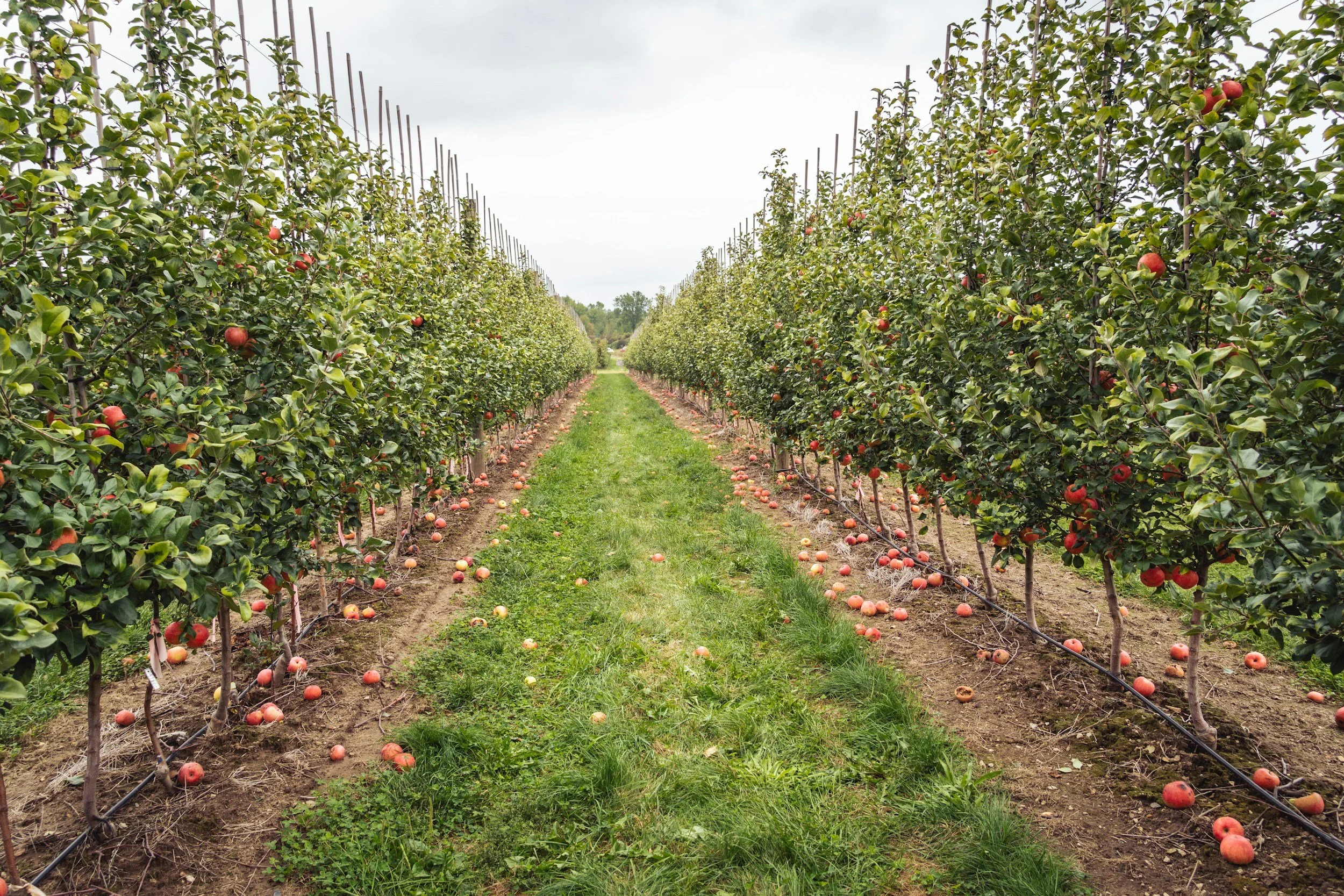
The grape crews were out on the hills above Lake Leelanau this week, which is the reliable sign that we've rolled into the season when farm acreage starts showing up on the market. Some of that acreage is enrolled in a state program called PA 116. Buy a parcel that's in it without knowing, and you've bought land you aren't allowed to build a house on.
Not permanently. But not on your timeline either, and not without two separate government bodies signing off on it.
What the agreement is
Part 361 of the Natural Resources and Environmental Protection Act (Public Act 451 of 1994) lets a farm owner sign a Farmland Development Rights Agreement with the State of Michigan. Everybody still calls it PA 116, after the 1974 law it grew out of, and MDARD's own web pages call it that too.
The owner agrees to keep the land in agricultural use for a minimum of ten years and a maximum of ninety. In exchange they can claim a Michigan income tax credit for the amount their property taxes exceed 3.5 percent of household income, and the enrolled land is exempt from special assessments for sanitary sewers, water, lights and non-farm drainage.
About 3.3 million acres statewide sit under one of these right now, and a healthy share of that is fruit belt, which is us.
It's a recorded covenant and it runs with the land. The seller signed it. You inherit it.
You can't just build
The language is specific. A structure shall not be built on enrolled land except for a use consistent with farm operations, which includes a residence for an individual essential to the operation of the farm, or lines for utility transmission, or (and this is the whole ballgame for most buyers) "with the approval of the local governing body and the state land use agency." That's the township board if the township has a zoning ordinance, the county board of commissioners if it doesn't, and then the state on top of that.
"Essential to the farm" is a defined term and it's stricter than people assume. Under section 36110(5) you're a co-owner, partner, shareholder, farm manager or family member who either carries a financial interest equal to at least half the cost of producing the crop, or works 1,040 hours a year in the farming operation and can document it with W-2s or payroll records. Mowing on weekends doesn't get you there.
If a listing for enrolled acreage says "build your dream home," I treat the rest of that listing as unverified until somebody shows me the agreement.
Getting out costs money, and it costs time
Say the seller agrees to terminate before closing. There's a fixed list of conditions that qualify for early termination: death or disability of the agreement holder or a person essential to the farm, a parcel up to two acres with a structure on it that predates the agreement, a parcel up to two acres for a residence for a person essential to the farm, land that's economically inviable, surrounding land use that restricts farming, irreversible natural change to the land, a court order, or "public interest is served by the release."
I don't know how MDARD weighs that last one and I've never gotten a clean answer on it. Ask them, not me.
Except when it's death or disability, the law requires repayment of the last seven years of tax credits attributable to the part being terminated, plus 6 percent simple interest. MDARD reviews the request, sends it to the Department of Treasury to calculate the number, waits, and then notifies the landowner what's owed. Their own page tells you to expect the process to take two months or more.
Set two months or more against a normal 45-day closing and you can see the problem. This is a contingency you write before you're under contract, not a phone call you make in week three.
The lien
Agreements expire, and the landowner has to tell MDARD within six months of the natural termination date whether they're extending or letting it lapse (MCL 324.36107).
If it expires, MCL 324.36111(8) requires repayment of the credits taken in the final seven years. Treasury runs the number, MDARD sends a letter, and if it isn't paid within 30 days of that notice, MDARD records a lien against the property at the county Register of Deeds.
Read that again with a buyer's eyes. The credits were claimed by somebody else. The lien attaches to the dirt. If the parcel changed hands anywhere in those seven years and nobody squared up the payback, you want it surfaced in the title commitment, in writing, before you close. MDARD's page does say a lien isn't required if neither you nor any prior owner claimed credits during the final seven years, which is exactly why "did anyone claim the credit, and when" is a question worth asking out loud instead of assuming.
Splits
All of the land described in a single agreement has to stay under one ownership. So if a seller wants to keep the farmhouse and ten acres and sell you the back forty, the agreement has to be formally split first, and each resulting piece has to qualify on its own: 40 acres or more with at least 51 percent in agricultural use, or between 5 and 40 acres with 51 percent agricultural and capable of producing $200 a year per cleared and tillable acre. Specialty farms are their own category at 15 acres and $2,000 of gross annual income.
Woodlots don't count. The act's definition of agricultural use runs long (fruits, grains, livestock, berries, nursery stock, Christmas trees, maple syrup production) and then says flatly that it does not include the management and harvesting of a woodlot. Sixty acres of hardwood behind an orchard isn't helping anybody's 51 percent.
The split form on MDARD's site is named Split-Form_Updated-11152024.pdf, which tells you roughly how often it gets revised. The transfer form is pa_116_Transfer_Request.pdf. If you do buy enrolled land and want to claim the credit yourself, that transfer form plus a copy of the recorded deed is what makes you eligible.
One wrinkle for the rental crowd
The enrollment instructions exclude land subject to a rental or lease agreement that isn't consistent with farm operation, and the example MDARD gives is a second residence rented to someone not connected with the farm.
I read that as a live problem for anyone eyeing an enrolled parcel as a vacation rental play, and it stacks on top of whatever the township already says, which up here varies enormously from one township line to the next. If that's the plan, get it in writing from MDARD before you write the offer.
Before you write the offer
Pull the title commitment early and look for a recorded Farmland Development Rights Agreement. Get the agreement number and the expiration date from the seller. Ask whether credits were claimed in the last seven years, and by whom. If you're going to need a release, start it before you're in contract, because two months is two months.
Questions go to MDARD's Farmland and Open Space Preservation Program at MDARD-PA116@michigan.gov, or by mail at P.O. Box 30449, Lansing, MI 48909. Reference the agreement number. They're reachable and they do answer.
None of this makes enrolled farmland a bad buy. The credit is real, the special assessment exemption is real, and if you want to farm the ground, the program is doing precisely what it was built to do. It's the buyer who sees forty acres of Leelanau hillside and pictures a house on the high spot who needs to know what's recorded against it first.
If you're looking at farm ground around Suttons Bay, Lake Leelanau or Cedar this fall, send me the parcel number before you fall in love with it and I'll pull what's recorded.
Taylor Brown, Realtor
Taylor@taylorbrownrealtor.com
(231) 360-1510
