On Old Mission Peninsula, the Driveway Permit Comes From the State, Not the County
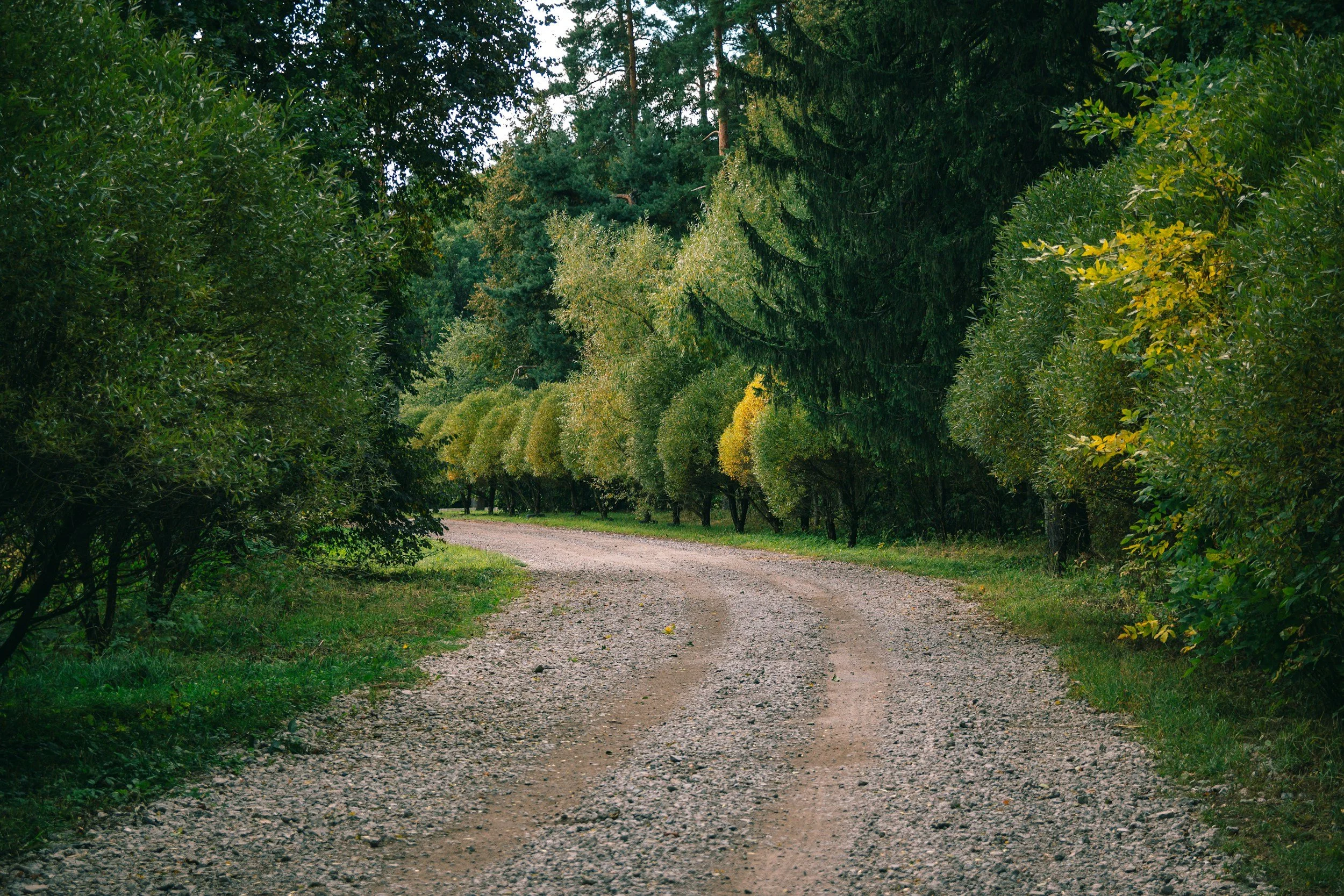
Center Road is M-37. Not "near M-37." The road itself, from the edge of Traverse City all the way north to the lighthouse, is a state trunkline, the same route number that runs down past Grand Rapids. So if you buy a vacant lot on Old Mission and you want to cut a driveway in off Center, the Grand Traverse County Road Commission is not who signs it. MDOT is.
MDOT's fee schedule lists $30 for a residential or farm field driveway. Grand Traverse charges $50 for a gravel residential drive and $100 if you're paving it. The state highway with the 55 mile an hour traffic and the cherry trucks is the cheaper permit, which I find funny every time I think about it.
The fee is the least important thing on this page.
Which road it fronts decides who you call
Jurisdiction flips more often up here than people expect. M-22 the whole length of the Leelanau shoreline, M-204 across from Leland to Suttons Bay, M-201 up to Northport, M-72 out to Empire, US-31 through Elk Rapids, M-88 through Bellaire and Central Lake, M-66 down through Kalkaska, and M-37 the full length of Old Mission are all state trunklines. Those are MDOT permits, filed through the MDOT Permit Gateway on the form they call 2205, and reviewed out of the Traverse City Transportation Service Center. MDOT's North Region covers 21 counties and every county we work in is on the list.
Anything that isn't a trunkline and isn't private belongs to a county road commission, and each one runs its own shop. In Leelanau that's the office at 10550 East Eckerle Road in Suttons Bay, 231-271-3993. If the road is a two-track with a name somebody's grandfather picked, you're in private road territory, which comes with its own set of problems.
MDOT's own FAQ is blunt about skipping the step. Your driveway may be removed by the department, or you may hear from the Attorney General's office. I have never heard of that happening to a homeowner up here. I also wouldn't test it. Grand Traverse takes a simpler approach and doubles the fee for anyone who works in the right-of-way without a permit, and that's printed right on their permit page.
The township won't take your application first
This is where the order of operations costs people money. Glen Arbor Township hands out a one-page sheet of what has to accompany a land use permit application, and near the top, in capital letters, it says do not apply for a land use permit until other required permits have been obtained. The driveway permit is item six on that list. The same sheet and the same zoning administrator cover Centerville, Empire, Kasson and Leland.
So the real sequence on a Leelanau build is address confirmation from county planning, then health department sign-off on water and septic, then a soil erosion permit if one applies, then the driveway permit from whoever has jurisdiction, and only after all of that does the township look at your house plans. Get the order wrong and nobody denies you anything. You just go back to the end of a line that runs 7 to 10 business days at each stop.
Grand Traverse adds a couple of wrinkles worth knowing before you budget. They won't release a driveway permit until you have named the contractor doing the work and that contractor has sent an ACORD certificate adding the road commission as additionally insured. If you bought the parcel within the past year, they want a copy of the warranty deed with the application. And if you're in a hurry, $100 buys you an expedite.
Slope
In Leelanau County a soil erosion permit is required for any earth change within 500 feet of a lake or stream, within 100 feet of a regulated wetland, an acre or more in size, or for developing or expanding a driveway with a slope of 10 percent or greater.
Read that last one again if you're shopping bluff lots. A lot of the best vacant parcels off M-22 sit well above the road, and getting a vehicle from the pavement up to a building site on one of those means a cut that clears 10 percent without trying. That's a separate permit from a separate office, and your excavator will price it separately too. I would not write an offer on a steep lot up there without walking the grade and calling the road commission first. I don't know off the top of my head whether Antrim and Benzie use that same 10 percent trigger, so call the county you're buying in instead of taking my word for the one next door.
The road commission also gets a vote before you split anything. Under Act 591 of 1996, a parcel division has to meet the road commission's location standards, which is a sight distance review, and it is a different application than the driveway permit. Grand Traverse runs it through their surveyor at 231-922-4849, extension 206, and allows the same 7 to 10 business days. If you're buying 20 acres thinking you'll carve off five later, that review is what decides whether the new parcel has a legal, safe place to put an approach. Two driveways 200 feet apart on a blind curve is the exact thing it exists to stop.
What closes in November
Leelanau's right-of-way standards don't allow underground utility work in the right-of-way between November 15 and April 1 unless staff approves it day by day. Buried electric and gas need 36 inches of cover, phone and cable 30 inches, and a bore under the road wants four feet. You are not getting 36 inches of trench out of frozen Leelanau sand in January.
Grand Traverse notes on its own application that inspections get delayed by inclement weather, which in practice means everything stacks up in the shoulder season. It is the middle of September. If you're closing on land this fall and you want a gravel approach cut and power run to the site before the ground locks up, you have roughly eight weeks and a permit office that is already busy.
None of this is dramatic. It's a calendar, and most buyers don't find out about it until they are standing in it.
What to check first
Pull the parcel up on the county GIS and read the road name. An M or a US in front of it means a state permit. A named county road means the road commission. Then call whichever office has it and ask two questions: does this frontage have adequate sight distance for an approach, and is there anything about this stretch of road you would flag. They answer. They would much rather have that conversation in September than in March, and if the answer is a bad one you want it during the inspection period, not after you own the lot.
The vacant parcels that turn into headaches are almost never the ones with a bad soil test. They're the ones where the only spot a driveway physically fits is the one spot the road commission won't approve. Private road access is its own version of the same problem. If you want to practice reading a few, our current listings are here.
Taylor Brown, Realtor
Taylor@taylorbrownrealtor.com
(231) 360-1510
