Written in April 2026. The market numbers below are from that month and have moved since, so ask us for today's.
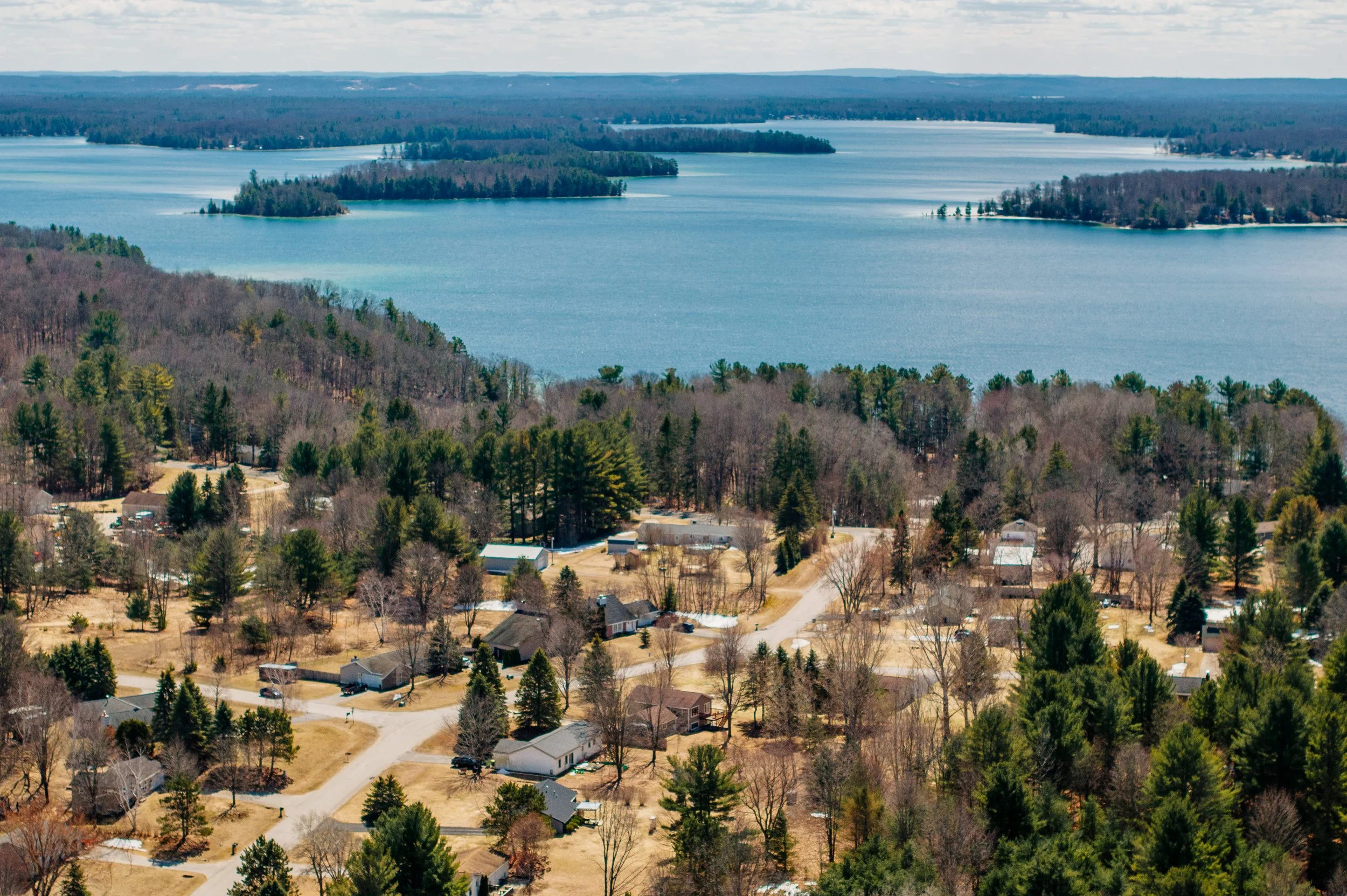
Drove past the south end of Glen Lake yesterday and the ice was gone. Not gray, not patchy — gone. Torch opened up sometime around the 7th, Leelanau a few days before that, and Elk Lake is hanging on by a thread that probably won’t make it through the weekend. If you live up here long enough, you stop checking the calendar for spring and start checking the lakes.
Most people think waterfront season kicks off Memorial Day weekend. That’s when the boats go in, the docks come out of the yard, and the vacation rental market wakes up. But in our business, the real Northern Michigan waterfront season — the window that sets the tone for the whole year — is the three weeks that start the day the ice leaves.
The reason the timing matters is visibility
Frozen waterfront looks like a parking lot. Muddy waterfront in late March looks worse. But the week the lakes turn black and the shoreline starts to dry, a property photographs and walks like a completely different listing. Buyers who scrolled past a place in February will sometimes circle back in mid-April and suddenly see it for what it is. We see this pattern every single year. Nothing about the house changed — the lake did.
That three-week window is also when the year’s comparable sales start to establish themselves. The deals that close in late April and early May become the comps everyone argues about in July. If you want to understand pricing on Torch or Glen or Leelanau for the rest of 2026, watch what happens between now and May 1.
The dock guy bottleneck
Here’s a thing nobody tells you about buying a waterfront home up here: the dock isn’t really part of the house. It comes out in the fall and it goes back in sometime between ice-out and the first good weekend. And the guy who puts it back in is busy.
Every spring, the handful of local crews that service Torch, Elk, Glen, Big and Little Glen, Leelanau, Long Lake, and the Chain of Lakes run a waiting list that starts around April 1 and doesn’t fully clear until early June. If you’re closing on a waterfront place in May, understand that your dock might not actually be in the water on closing day. That’s not a red flag — it’s just how it works up here. Over the past twenty-five years Janel has seen just about every variation of “the dock is coming Tuesday” go sideways, and the fix is almost always the same: get on a crew’s list the week you go under contract, not the week you close.
For sellers, this creates a small but real listing advantage. A waterfront home that gets its dock in early and shoots photos the first week of clean open water photographs better than the same house three weeks later, because by then every listing in the county looks equally beautiful. Early April lake photos are the equivalent of getting your senior pictures taken before everybody else.
What the waterfront board actually looks like as of April 2026
Inventory in Grand Traverse and Leelanau counties is still painfully thin on the water. Across the two counties combined there are fewer than 60 active waterfront listings the week of April 11, 2026, and a good chunk of those are either teardown cottages priced like new builds or trophy homes north of $3M that are going to take their time finding a buyer.
The real competition for buyers is in the $600K to $1.2M range on a mid-tier inland lake — modest frontage, livable but not renovated, good bones. That’s the segment that gets four to six showings the first weekend, goes into multiple offers by Tuesday, and closes over ask. We’ve watched this shape play out on Lake Leelanau every April for the last several years.
On the higher end, waterfront transactions in Grand Traverse County are still running well ahead of where they were a couple of years ago — close to a 29% jump in the last twelve months by our count — and most of the real movement happens between now and the Fourth of July.
Why buyers should actually be aggressive in this window
If you’re a buyer on a waterfront budget, the next three weeks are weirdly in your favor, and here’s why.
The spring flood of listings hasn’t fully hit yet. Most sellers are still waiting for their landscaper, their dock installer, their stager, and their drone photographer to line up, which is usually a late April to early May thing. That means you’re looking at a skinny inventory pool that hasn’t been picked over by the Memorial Day out-of-state crowd.
Out-of-state buyers — Chicago, Grand Rapids, Detroit, plus the Cincinnati and Indianapolis contingents — mostly wait until school is out. They start showing up hard on weekends around May 15. Before that, you’re mostly competing with locals and a few retired snowbirds working through spreadsheets from Florida.
The 15-minute drive test is still the best tool we have for pressure-testing a waterfront place in this window. Drive it on a Tuesday at 5:30 p.m., drive it on a Saturday at 11 a.m., and drive it on a Sunday afternoon with the boat trailers. If the road feels reasonable in all three windows, the location is probably fine. If any of them feel like I-94, keep moving. This is the kind of thing you only notice by actually driving it — it’s one of the reasons we recommend spending time in places like Suttons Bay or Elmwood Township before you write an offer on a lake house in either one.
What it means if you’re selling
If you’re planning to list a waterfront home in spring 2026, the honest advice is: don’t wait for perfect. Perfect means the landscaping is in, the dock is installed, the lilacs are blooming, and the drone photos look like a Sleeping Bear postcard. Perfect also means you’re listing on May 20 against forty other equally perfect listings.
Listing the week of April 11, 2026 or next — even with a little mud in the driveway and the dock still in the yard — often nets more because the buyer pool is hungrier and the comparison set is thinner. You can always swap in updated landscaping and dock photos three weeks later. You cannot go back and relist into a less crowded market.
A note on the inland lakes versus the big bay
Grand Traverse Bay has its own rhythm. The bay doesn’t freeze edge-to-edge most years anymore, so the visual reset of ice-out is less dramatic there. The inland lakes — Glen, Torch, Elk, Leelanau, Long, Silver, Duck — are where the calendar actually pivots. If you want to understand the Northern Michigan waterfront market, watch the inland lakes first. They tell the story about three weeks before the bay does.
The short version
Ice is off the inland lakes. The waterfront season that actually matters — the one where pricing, competition, and comp sets get established for the whole year — started the week of April 11, 2026. If you’re buying, move fast while inventory is thin and out-of-state buyers are still in their calendar apps. If you’re selling, the landscaping does not need to be done to list. The lake does the heavy lifting as of April 2026.
If you want to walk through waterfront options in Grand Traverse, Leelanau, or Antrim over the next few weeks — or just want to figure out which inland lake actually fits your life — shoot me a note. I’ll be on a dock somewhere.
Taylor Brown, Realtor
(231) 360-1510
